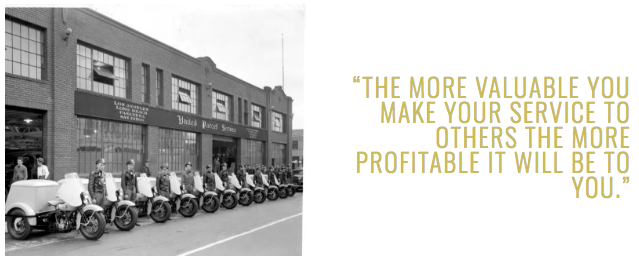
Jim Casey was only 19 years old when he borrowed $100 to start what would become United Parcel Service (UPS), the world's largest package delivery company. Founded in Seattle in 1907, the company survived two World Wars, the Great Depression, and radical shifts in technology by focusing on efficiency, humility, and constant adaptation.
This 19 year old turned $100 and a bicycle into a $90 billion empire
Hard work beats talent when talent doesn't work hard. "The artist is nothing without the gift, but the gift is nothing without work" Émile Zola
Jim Casey, the boy who quit school, built an enduring empire by turning hard work, discipline, and practical problem-solving into a business that could scale. After leaving school early, he entered the workforce and learned how to operate within tight constraints—managing time, handling logistics, and earning trust through reliability. He focused on building systems rather than relying on luck: dependable routes, consistent service, and operations that could withstand daily disruptions. Over time, his approach expanded from local work into a larger enterprise, supported by a workforce that understood standards and by customers who valued dependable delivery. Casey’s empire grew because he treated endurance as a design requirement—planning for continuity, improving efficiency, and maintaining performance even as demand increased.
📦 From Bicycle Messenger to Global Empire
Jim Casey’s journey began out of necessity. When his father passed away, he left school at age 11 to help support his family, working as a bicycle messenger. This early grind gave him a deep understanding of the delivery business.
[1907: American Messenger Company] ➔ [1919: Merchants Parcel Delivery] ➔ [1930: United Parcel Service]
   Started in a Seattle basement       Expanded to Oakland; became UPS     Expand
🤝 The Core Values That Built UPS
Casey did not just build a logistics network; he built a highly distinct corporate culture that remains intact today.
The "Partnership" Philosophy: Casey believed that employees who owned a piece of the company would work harder. He established a system where managers and supervisors could buy stock, creating a culture of shared determination.
Obsessive Efficiency: Long before data analytics, Casey timed drivers, mapped out the quickest routes, and mandated that drivers keep their keys on a finger clip so they wouldn't waste seconds searching their pockets.
The Invisible Leader: Casey famously shunned personal the spotlight. He believed the company's brand mattered infinitely more than any individual executive. He often said, "Our individual corporate lives are short. The company can be immortal."
Cleanliness and Professionalism: To build trust with retailers and homeowners, Casey insisted on a spotless image. This led to the iconic, clean-shaven drivers, the uniform brown uniforms, and the meticulously washed brown trucks (chosen because brown hides dust best).
🕊️ A Legacy of Endurance
Jim Casey remained active with UPS until his death in 1983. Because he never married and had no children, he left his massive fortune to the Annie E. Casey Foundation, a charitable organization dedicated to helping foster children and families at risk.
He didn't just build an empire out of cardboard boxes and brown trucks—he proved that a business built on discipline, shared ownership, and adaptability could outlive its founder by generations.
Core Business: United Parcel Service is a premier global package delivery and supply chain management company.
Operations: The company manages ground, ocean, rail, and air freight transportation, alongside customs brokerage and automated fulfillment.
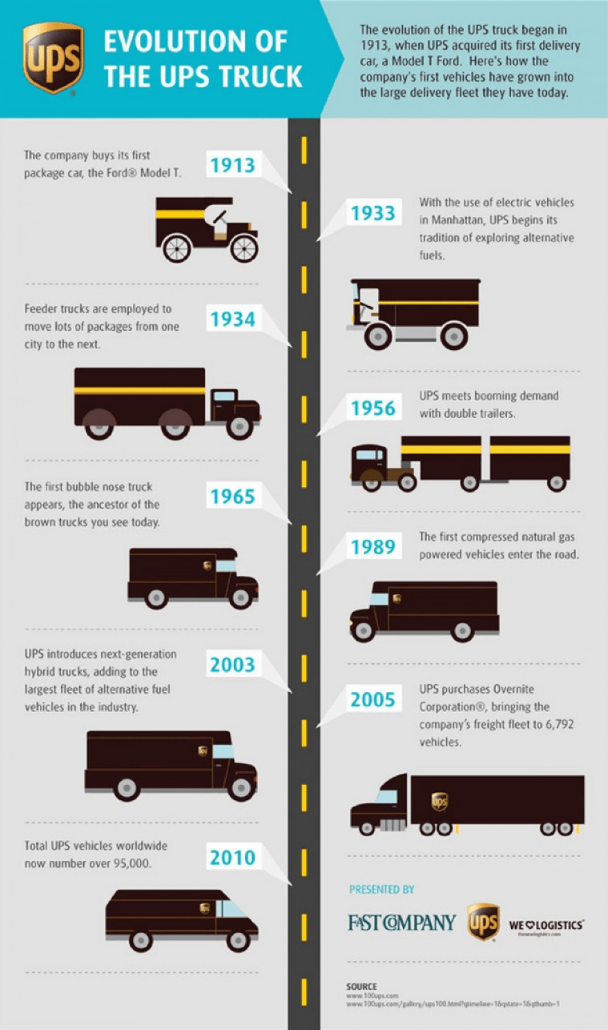
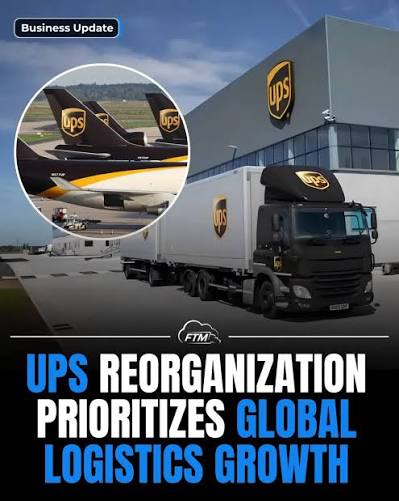
Network Strategy: UPS utilizes an efficient hub-and-spoke sorting model to consolidate packages, optimize truck capacity, and ensure predictable delivery schedules. The evolutionary growth The Global Growth
Comments (0)
No comments yet. Be the first to share your thoughts.
Comments (0)
No comments yet. Be the first to share your thoughts.