Business
Built to Endure : Rolls-Royce, How A Newspaper Boy Created Rolls-Royce
September 4, 2026 · 18 views ·by Odeyemi Oluwafemi
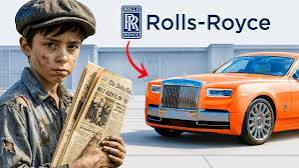
The legendary luxury car brand Rolls-Royce was co-founded by Sir Henry Royce, a man who overcame extreme childhood poverty and started his working life as a nine-year-old newspaper boy. His journey from a destitute child selling papers on the cold streets of London to becoming the greatest engineer of his era is a masterclass in vision, perseverance, and an unrelenting obsession with perfection.
▶ Watch the video project nightingale
▶ Watch the video, the feeling of necesity
▶ Watch the video expensive Rolls Royce
▶ Watch the video project nightingale
▶ Watch the video, the feeling of necesity
▶ Watch the video expensive Rolls Royce
📉 Chapter 1: Forged in Poverty
Henry Royce was born on March 27, 1863, in Alwalton, England. His family struggled constantly with financial hardship, and after his father's flour mill went bankrupt and his father tragically passed away, nine-year-old Henry was forced to drop out of school. With only one year of formal schooling, he walked the streets of London selling newspapers and delivering telegrams just so his family could afford bread.
➡️ Chapter 2: The Path to Engineering
At age 14, a relative paid for him to start an apprenticeship at the Great Northern Railway Works. There, Royce discovered his true calling. He taught himself algebra, geometry, and the fundamentals of engineering. By 1884, he saved enough money to start his own mechanical business, manufacturing basic electrical components like doorbells and arc lamps. His reputation grew rapidly because of his refusal to build anything short of perfect.
🌟 Chapter 3: The Obsession with Perfection
In 1904, dissatisfied with a noisy, unreliable French car he had purchased, Royce famously declared he could build a better one himself—and he did, creating the Royce 10. His brilliant engineering caught the attention of Charles Rolls, a wealthy aristocrat who raced cars and owned a London dealership.
On May 4, 1904, the two men met at a Manchester hotel. The alliance was seamless: the poor genius who built flawless machines joined forces with the wealthy salesman who could market them to royalty.
📊 Chapter 4: Built to Endure
In 1906, they officially formed Rolls-Royce Limited. Their breakthrough came with the Silver Ghost, a car that completed an unprecedented 15,000-mile endurance run without a single mechanical breakdown. It was instantly crowned "the best car in the world," setting a benchmark for ultra-luxury that continues to define the automotive industry today.
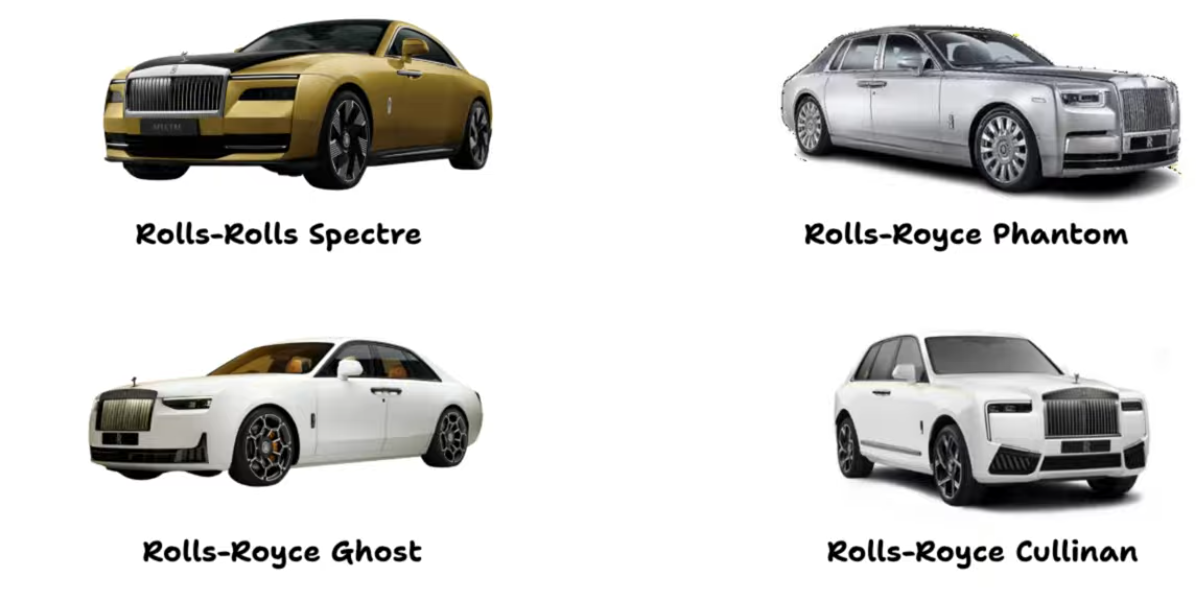
Built to Endure: Rolls-Royce traces its origins to a moment when engineering ambition met practical need, and its early identity was shaped as much by people and process as by horsepower. In the early 1900s, the company’s foundations were laid by Charles Rolls and Henry Royce, whose partnership combined Rolls’s commercial drive with Royce’s obsession with reliability and precision. Royce, a self-taught engineer, had already earned a reputation for solving mechanical problems with disciplined design—tight tolerances, careful materials selection, and a relentless focus on performance under real-world stress. The story often begins with the newspaper boy who helped create the conditions for that engineering breakthrough: the boy’s work and the small, everyday earnings it enabled reflected the era’s economic reality, where modest incomes could still support the pursuit of education, tools, and opportunity. That kind of early, incremental effort mattered because Royce’s later success depended on the ability to build systems that could be trusted, not merely admired. As Rolls-Royce emerged, its defining characteristic was durability—engines engineered for long service, consistent output, and reduced failure rates—an approach that distinguished it from competitors who prioritized novelty over dependability. The company’s growth accelerated as its cars and aircraft engines proved themselves in demanding conditions, reinforcing a brand promise that endurance was not a slogan but a measurable outcome. By the time Rolls-Royce became synonymous with high-performance engineering, the underlying lesson from its beginnings was clear: enduring products come from repeatable craftsmanship, rigorous testing, and a culture that treats failure as information rather than fate.
From Hardship to Engineering
Early Struggle: Born in 1863 in England, Royce faced severe financial hardship and had barely a year of formal schooling, supporting his family by selling newspapers.
The Railway Apprenticeship: At age 14, an aunt helped secure him an apprenticeship at the Great Northern Railway in Doncaster, sparking his lifelong mastery of mechanics.
Electrical Business: Royce later started an electrical enterprise, F.H. Royce and Company, building dynamos and cranes.
Building a Better Car: After buying a frustratingly noisy and unreliable French Decauville car, Royce decided he could engineer a superior machine, leading to the creation of his first experimental Royce 10 car in 1904.
The Partnership with Charles Rolls: In May 1904, Royce met aristocratic car dealer Charles Rolls at the Midland Hotel in Manchester. Rolls was so impressed by the silence and smoothness of Royce's engineering that they agreed to manufacture and sell the vehicles together as Rolls-Royce.
Comments (0)
No comments yet. Be the first to share your thoughts.