Building an enduring organization or personal legacy requires a solid blueprint rooted in core values and a relentless pursuit of excellence.
The blueprint for lasting success relies on foundational pillars that balance stability with growth.
The blueprint the origin of excellence
The "Social Suite"
Christakis explains that humans share an evolutionary blueprint consisting of eight core traits, known as the "social suite":
Individual identity: The capacity to have and recognize distinct personal identities.
Love: Affection for partners and offspring.
Friendship: Forming deep, non-kin bonds with others.
Social networks: Organizing ourselves into interconnected webs of relationships.
Cooperation: Working together for mutual benefit.
In-group bias: A natural preference or care for one's own group.
Mild hierarchy: A preference for relative egalitarianism over rigid despotism.
Social learning: The ability to teach and learn from one another.
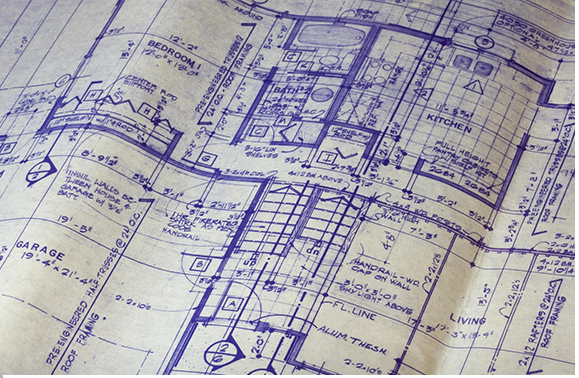
Built to Endure: The blueprint, the origin of excellence, begins with a clear design premise: longevity is engineered, not hoped for. Excellence starts at the blueprint stage, where requirements are translated into measurable specifications—materials selected for strength and corrosion resistance, tolerances defined for repeatable performance, and failure modes anticipated through stress, fatigue, and environmental testing. The origin of excellence is therefore systematic: a disciplined process that establishes standards, documents decisions, and verifies assumptions before scale. From there, durability is reinforced by manufacturing controls that maintain consistency, quality inspections that catch deviations early, and maintenance-ready design choices that simplify inspection, repair, and replacement. In practice, enduring performance is the result of alignment across the entire lifecycle—engineering, production, and operations—so the product or system performs reliably under real-world conditions, not just in initial trials.
Natural Selection for Goodness: Society survives because the evolutionary benefits of altruism, love, and friendship outweigh our capacities for violence and selfishness.
A Universal Design: Despite cultural differences, humans worldwide naturally construct societies with identical structural foundations.
Gene-Culture Co-evolution: Our genes shape our societies, and in turn, our societies continue to shape our genetic evolution over millennia.
Evolutionary Biology: Nicholas Christakis argues that humans share an evolutionary "social suite"—traits like cooperation, love, and learning—that acts as a biological blueprint for building functioning, excellent societies.
Operational Discipline: In industrial and professional contexts, a "blueprint of excellence" refers to foundational rules (like systems alignment, continuous improvement, and deep process understanding) used to master a craft or industry from the ground up.
Personal Uniqueness: Motivational frameworks often state that individual human design is the original "blueprint," meaning true excellence comes from recognizing personal uniqueness rather than copying others. blueprint The Blueprint of Enduring Excellence
Enduring excellence is not an accident of charismatic leadership; it is the deliberate result of a structured institutional blueprint. True organizational longevity and high performance require a careful balance between holding onto immutable core values and aggressively adapting to changing market realities. When built correctly, this structural foundation allows an organization to survive external chaos, transcend individual personalities, and maintain peak performance over generation.
Paradoxical Traits: Cultivate leaders who exhibit a distinct blend of deep personal humility and fierce professional will.
The Buffer Effect: Ensure leaders act as a protective buffer between organizational chaos and their teams rather than a funnel that creates burnout.
Talent Alignment: Focus heavily on the "first who, then what" principle—placing the right individuals in the correct roles before executing strategy.
2. Cultivate a Culture of Continuous Improvement
Data-Driven Loops: Integrate persistent feedback loops, maturity models, and standard operating benchmarks into everyday workflows.
Psychological Trust: Transition away from rigid "command-and-control" hierarchies to build agile environments rooted in collective trust and open communication.
Shared Purpose: Connect daily operational wins directly back to a larger, unified organizational mission to keep teams motivated
3. Preserve the Core and Stimulate Progress
The Unwavering Core: Protect the core values, moral courage, and fundamental identity of the organization at all costs.
Adaptive Strategies: Ruthlessly evolve products, operational models, and technical infrastructure to adapt to evolving market realities.



Comments (0)
No comments yet. Be the first to share your thoughts.