Education
Cause and Effect Analysis: The 5 Whys methodology.
June 26, 2026 · 8 views ·by Odeyemi Oluwafemi
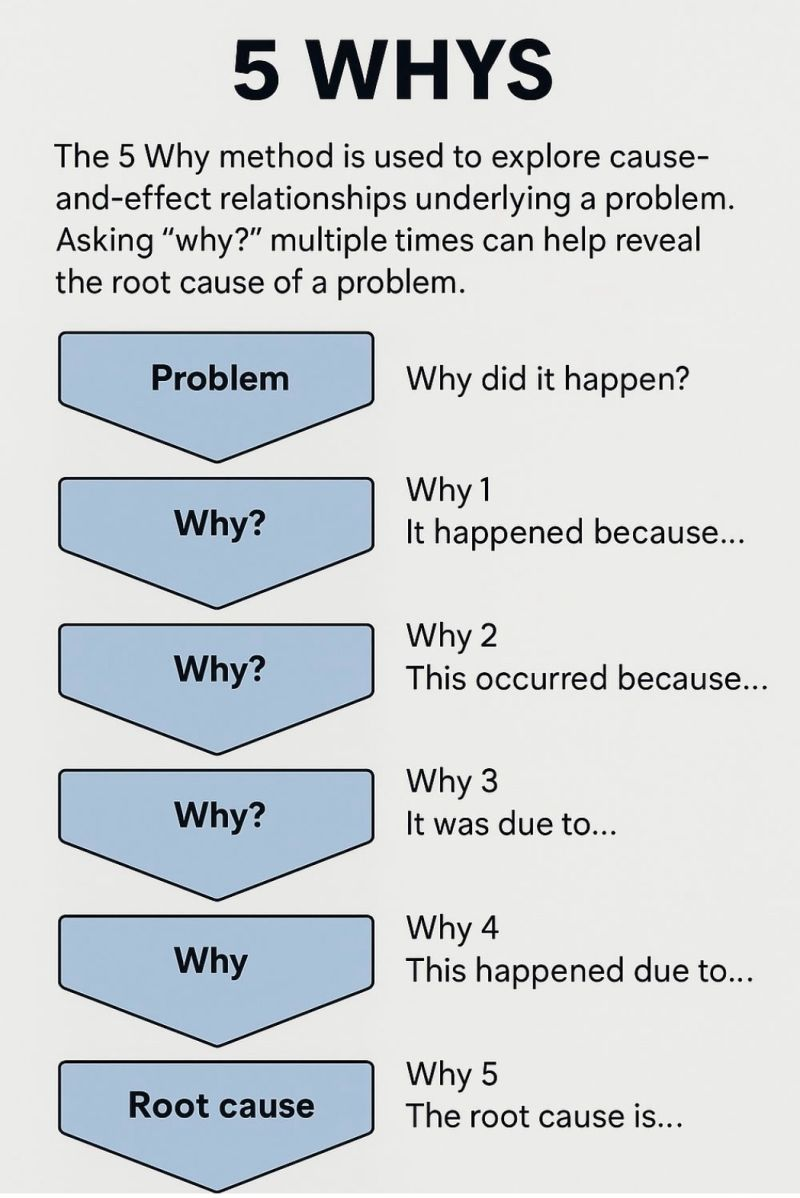
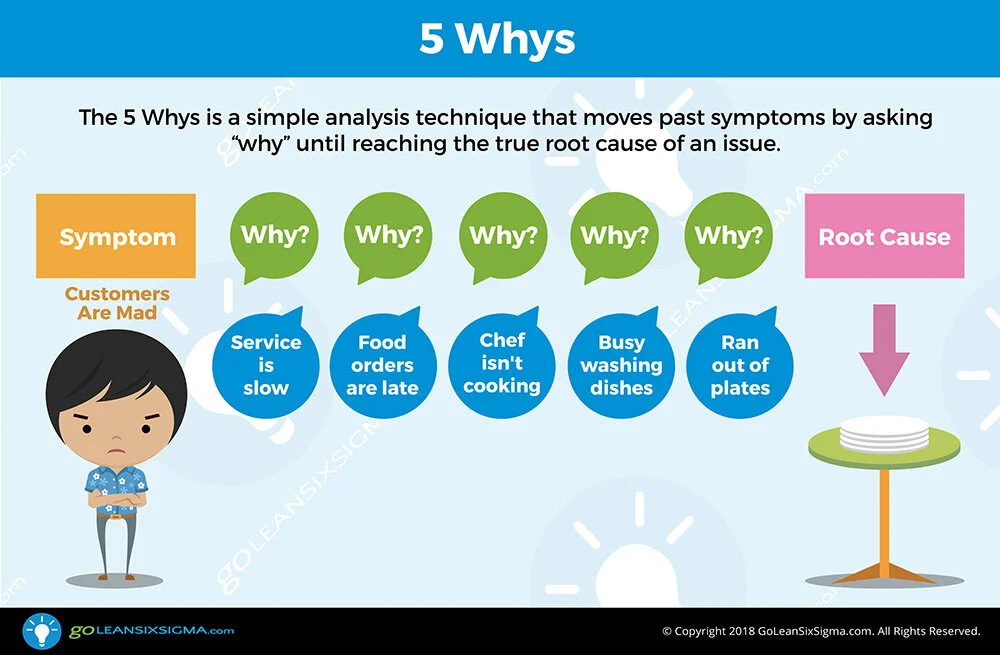
The 5 Whys is an iterative root-cause analysis technique used to explore the cause-and-effect relationships underlying a specific problem. Developed by Sakichi Toyoda and utilized within the Toyota Production System, the method aims to bypass surface-level symptoms to find the actionable root cause by asking "Why?.
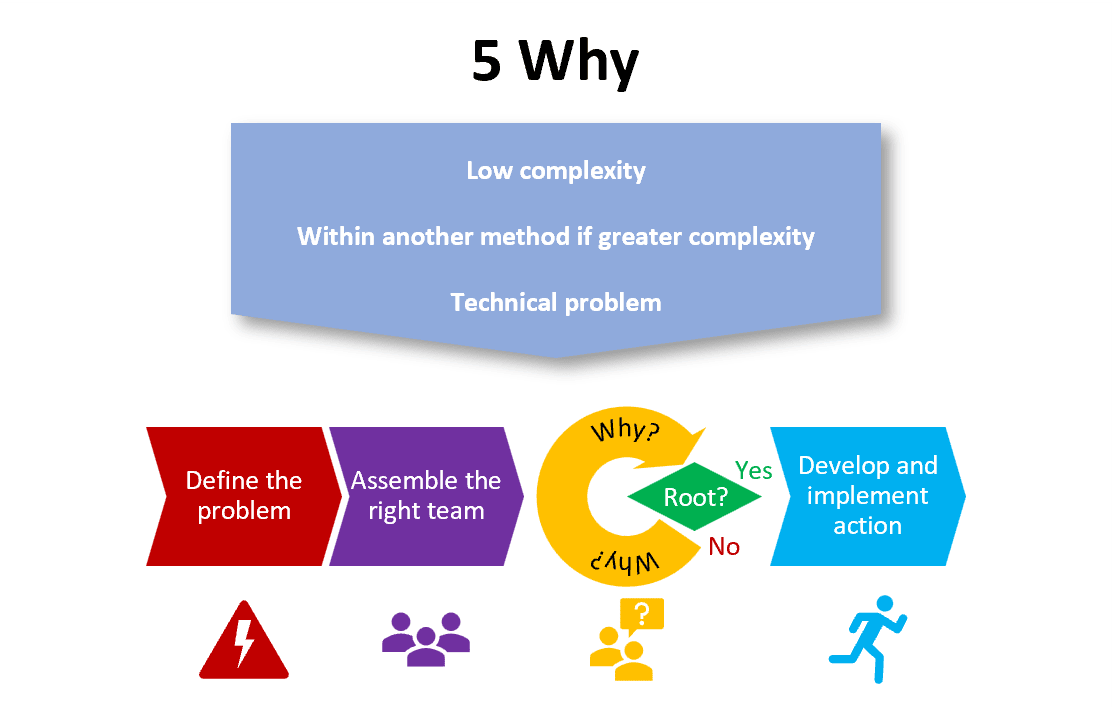
Define the Problem: Write down a clear, specific problem statement so the team is on the the same page.
Ask the First Why: Ask why the problem happened and record the answer.
Repeat "Why?": Take the answer from the previous step and ask "Why did that happen?" Do this typically five times, or until you find a root cause that you can act upon.
Identify the Root Cause: Pinpoint the fundamental, deepest underlying issue that caused the chain reaction.
Implement Countermeasures: Develop and execute a solution that addresses the newly found root cause.
ideas + solutions 👌
3 examples of Sakichi Toyoda model
There is solutions in all problems.
*1. For embedded systems that requires technological approach*
- *Idea*: ESP32 weather station that tweets you when Lagos rain is coming
- *Solution*: Use a DHT22 sensor + ESP32 + free weather API. Code it in C/C++ with Arduino IDE.
*2. For deep thinking practice*
- *Idea*: The “5 Whys” method. Stuck on a problem? Ask “why” 5 times deep.
- *Solution*: Turns surface symptoms into root causes. Works for riddles, computer bugs , and life decisions.
*3. For daily life in Lagos*
- *Idea*: how to overcome utilities company power outage randomness
- *Solution*: Small UPS + smart plug schedule for router/fridge. Keeps internet + food cold without running gen all day.
Another examples of the Japanese ( Sakichi Toyoda )Methodology
*Cause and Effect Analysis with the 5 Whys* = digging past the obvious symptom to find the real root cause.
It’s simple, but it forces *deep thinking* instead of surface fixes.
*How the 5 Whys works*
You keep asking “Why?” until you hit something you can actually fix. Usually 5 is enough, but stop when you reach a root cause you can control.
*Example - Lagos urban region with incessant power outage
*Problem*: My phone died during a client call.
1. *Why did it die?* → Battery was 0%
2. *Why was it 0%?* → I didn’t charge it last night
3. *Why didn’t I charge it?* → NEPA(Utility company) took light early, and I forgot to plug the charger into the power bank
4. *Why did I forget the power bank?* → I don’t have a routine for it
5. *Why no routine?* → My charging station is messy, so I can’t see what’s low
*Root cause*: Not “bad battery”. It’s “no visible charging system”.
*Solution*: Set up one corner as a “power dock” with labels for phone, power bank, earbuds.
*3 rules to follow in the Whys methodology*
1. *Focus on process, not people* - “I forgot” vs “The system made me forget”
2. *Stop at something actionable* - If the 5th why is “the economy”, that’s not useful. move back up to the actionable cause.
3. *One problem at a time* - Don’t branch into 10 whys. Pick one chain.
It’s the same muscle you use for riddles: don’t take the first answer, reanalyze the answers.
Nothing happens freely or by free will, it is brought about by sequence of known and unknown events that relatively or loosely connected .
When you think in a multidimensional array, you will find out there a meaning to the cause and effect of a zig zag Brownian motion(Odeyemi)
Comments (0)
No comments yet. Be the first to share your thoughts.