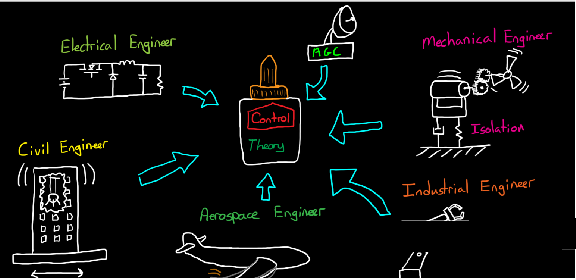
Control theory is a vital interdisciplinary field that combines principles from engineering and applied mathematics to create algorithms designed for the regulation and management of dynamic systems. It focuses on understanding how to manipulate the inputs of a system to achieve desired outputs, ensuring stability, performance, and efficiency. This branch of study encompasses various applications, including robotics, aerospace, automotive systems, and process control, where precise control mechanisms are essential for optimal functioning. By employing mathematical models and feedback loops, control theory enables the prediction and adjustment of system behaviors in real-time, facilitating advancements in technology and innovation across multiple sectors.
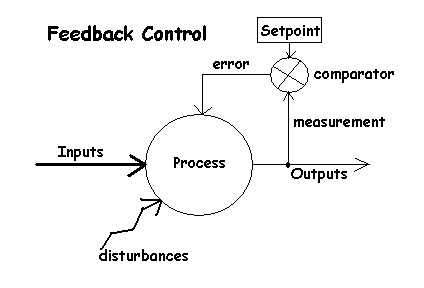
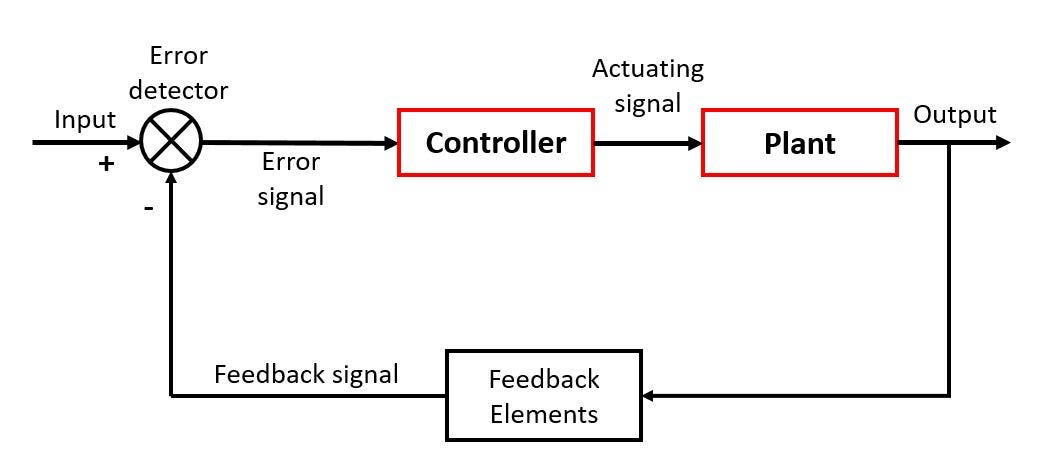
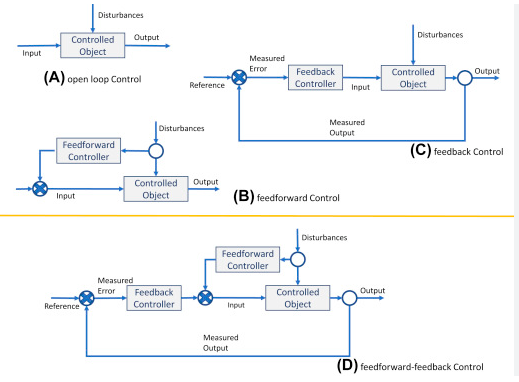
Feedback loops are fundamental components in control theory, where the output of a system is fed back into the input to regulate its behavior. This process allows for the adjustment of system performance based on the difference between desired and actual outputs, known as the error signal.
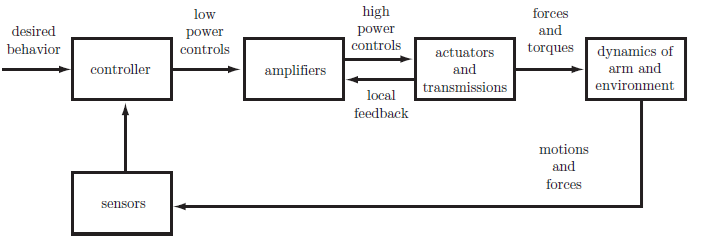
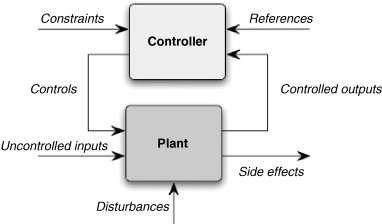
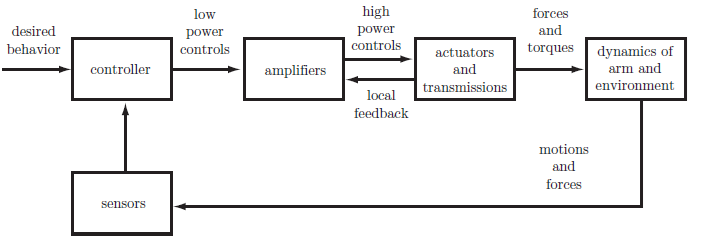
A feedback control loop consists of four main elements:
Sensor: Measures the current state or output of the system.
Controller: Compares the measured state to the desired setpoint and calculates the necessary adjustment.
Actuator: Applies the calculated adjustment (control input) to the system.
Plant: The actual physical or mathematical system (e.g., a robot arm or a car's cruise control) being controlled
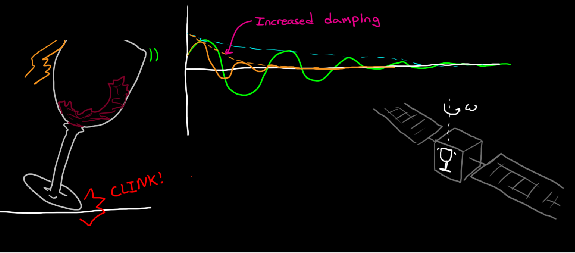
There are two primary types of feedback: positive and negative. Negative feedback reduces the output to stabilize the system, enhancing accuracy and reducing oscillations, while positive feedback amplifies changes, potentially leading to system instability.
Feedback loops are utilized in various applications, from simple temperature control systems to complex industrial processes, ensuring systems operate efficiently and maintain desired performance levels.
Control theory is broadly divided into different methodologies based on system complexity and available data:
Classical Control: Uses techniques like PID (Proportional-Integral-Derivative) controllers. It relies on frequency-domain analysis (like Bode plots) and is perfect for single-input, single-output systems like standard cruise control.
Modern Control: Utilizes state-space representations and time-domain analysis. It is highly effective for complex, multi-input, multi-output systems like aerospace guidance.
Comments (0)
No comments yet. Be the first to share your thoughts.