Education
EDUCATION IS CHANGING: THE NEW SYSTEMS, TECHNOLOGY & IDEAS TRANSFORMING HOW WE LEARN
August 25, 2026 · 15 views ·by Emma-Golden
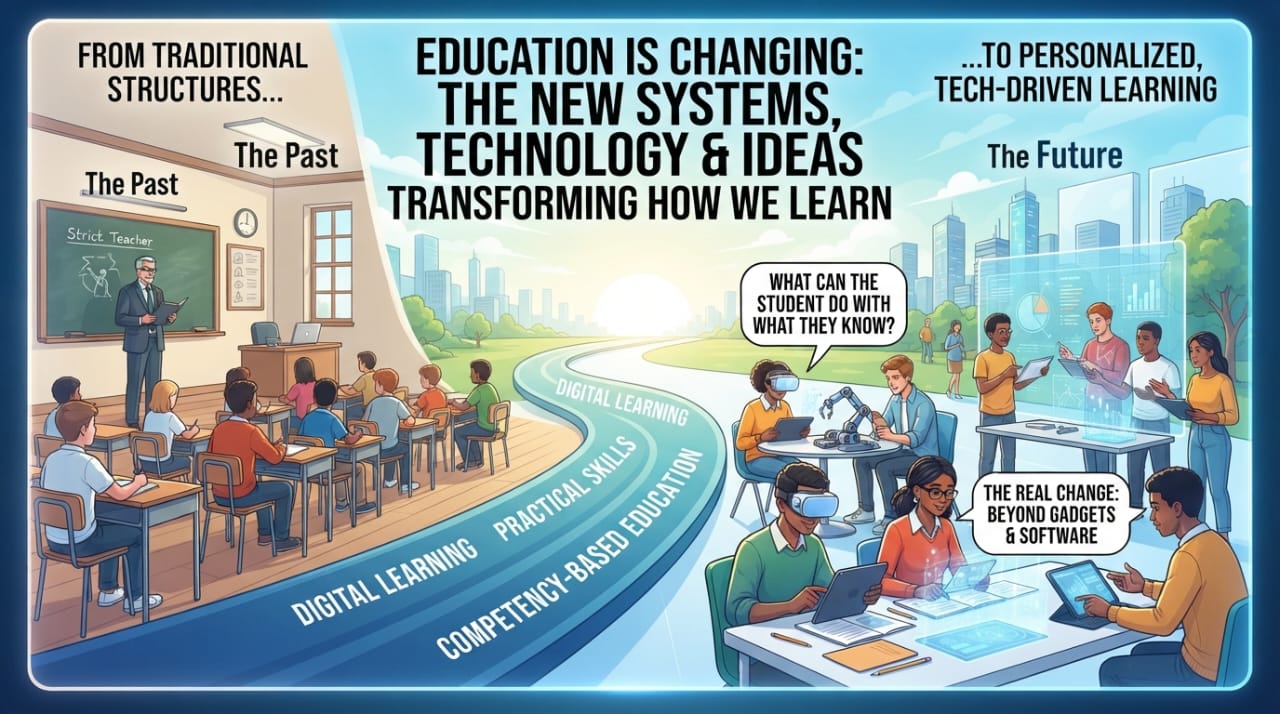
EDUCATION IS CHANGING: THE NEW SYSTEMS, TECHNOLOGY & IDEAS TRANSFORMING HOW WE LEARN
For generations, education followed a familiar pattern:
A teacher stood in front of a classroom, students listened, took notes, completed assignments, wrote examinations, and moved on to the next level.
It was a system built around structure, discipline, textbooks and examinations.
But the world students are preparing to enter has changed dramatically.
Technology has transformed the way people work, communicate, create businesses and access information. A student can now learn a new language from a phone, take a course from an institution thousands of kilometres away, use artificial intelligence to understand a difficult concept, or develop a professional skill without ever sitting in a traditional classroom.
And education is beginning to respond.
Across the sector, there is growing interest in digital learning, practical skills, competency-based education, personalized learning and the use of technology in the classroom. The goal is increasingly becoming not just to ask,
“What does the student know?”
but also,
“What can the student do with what they know?”
Artificial intelligence is another major part of this transformation. Students can use AI tools to brainstorm ideas, explain complicated subjects, practise languages and receive personalized assistance. Teachers can also use technology to create learning materials and support different learning needs.
But this transformation comes with an important warning: technology itself is not education.
Giving students devices does not automatically make learning better.
A digital classroom can still use outdated teaching methods.
A student can have access to thousands of online resources and still struggle to learn how to distinguish useful information from misinformation.
The real change must therefore go beyond introducing gadgets and software.
It must involve changing how students are encouraged to think, solve problems, collaborate and apply knowledge.
The future classroom may look very different from the classroom many parents remember. Learning may become more flexible, more personalized and more connected to real-world problems.
But one thing should remain at the centre: the student.
Education should not change simply because technology has changed. It should change because the needs of learners and the demands of the world have changed.
The question is no longer whether education will change.
It already is.
The bigger question is whether our schools, teachers, parents and policymakers are prepared to change with it.
For generations, education followed a familiar pattern:
A teacher stood in front of a classroom, students listened, took notes, completed assignments, wrote examinations, and moved on to the next level.
It was a system built around structure, discipline, textbooks and examinations.
But the world students are preparing to enter has changed dramatically.
Technology has transformed the way people work, communicate, create businesses and access information. A student can now learn a new language from a phone, take a course from an institution thousands of kilometres away, use artificial intelligence to understand a difficult concept, or develop a professional skill without ever sitting in a traditional classroom.
And education is beginning to respond.
Across the sector, there is growing interest in digital learning, practical skills, competency-based education, personalized learning and the use of technology in the classroom. The goal is increasingly becoming not just to ask,
“What does the student know?”
but also,
“What can the student do with what they know?”
Artificial intelligence is another major part of this transformation. Students can use AI tools to brainstorm ideas, explain complicated subjects, practise languages and receive personalized assistance. Teachers can also use technology to create learning materials and support different learning needs.
But this transformation comes with an important warning: technology itself is not education.
Giving students devices does not automatically make learning better.
A digital classroom can still use outdated teaching methods.
A student can have access to thousands of online resources and still struggle to learn how to distinguish useful information from misinformation.
The real change must therefore go beyond introducing gadgets and software.
It must involve changing how students are encouraged to think, solve problems, collaborate and apply knowledge.
The future classroom may look very different from the classroom many parents remember. Learning may become more flexible, more personalized and more connected to real-world problems.
But one thing should remain at the centre: the student.
Education should not change simply because technology has changed. It should change because the needs of learners and the demands of the world have changed.
The question is no longer whether education will change.
It already is.
The bigger question is whether our schools, teachers, parents and policymakers are prepared to change with it.
Comments (0)
No comments yet. Be the first to share your thoughts.