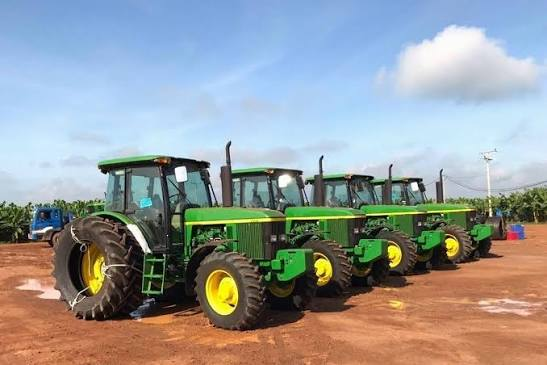
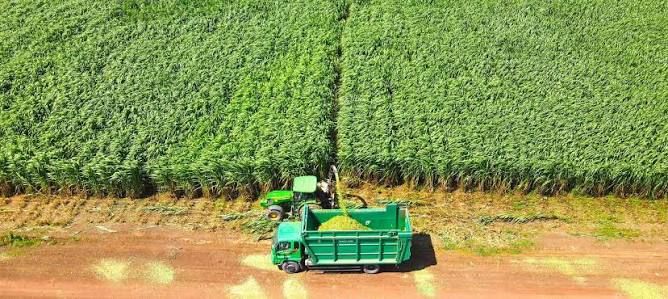
Large-scale and mechanized farming involves cultivating extensive land areas using motorized machinery and advanced engineering systems instead of manual labor or draft animals. This approach leverages economies of scale to mass-produce food and livestock at a lower cost per unit. mechanized Farming Norman Borlaug Large-scale and mechanized farming is the practice of cultivating vast expanses of agricultural land by substituting manual labor with advanced machinery, automation, and commercial business models. This combination leverages economies of scale to produce massive quantities of food and livestock at a lower cost per unit, which is critical for national food security and global supply chains.
Core Pillars of Large-Scale Mechanized Agriculture
Advanced Machinery: Traditional hand tools and draft animals are replaced by high-horsepower tractors, heavy-duty bulldozers, and multi-crop combine harvesters.
Commercial Orientation: Unlike smallholder subsistence farming, large-scale operations function as agribusinesses focused on maximizing yield, processing efficiency, and market integration.
Precision Technology: Modern large-scale fields increasingly rely on Precision Agriculture technologies—such as GPS-guided tractors, drone mapping, IoT soil sensors, and Variable Rate Technology (VRT)—to optimize water, seed, and fertilizer use.
Advantages: Increases food security, boosts worker productivity, lowers per-unit production costs, and handles large acreages quickly. High Yield & Efficiency: Heavy machinery finishes massive tasks in seconds or minutes that would take manual laborers days.
Lower Operational Costs: Maximizing field sizes reduces the per-unit cost of production through economies of scale.
Post-Harvest Loss Reduction: Integrated mechanized systems handle, dry, and store crops quickly, preventing spoilage
Challenges:High upfront capital investment, potential soil compaction from heavy machinery, and risks of environmental degradation or localized job displacement if not managed sustainably.
High Initial Capital: Buying, operating, and maintaining modern fleets requires massive up-front investments.
Environmental Impact: Heavy machinery can cause soil compaction, while large monoculture fields risk decreasing biodiversity and accelerating soil erosion if managed poorly.
Skill Gaps: Operating advanced digital or robotic systems requires specialized technical training and farm management acumen
Comments (0)
No comments yet. Be the first to share your thoughts.




Comments (0)
No comments yet. Be the first to share your thoughts.