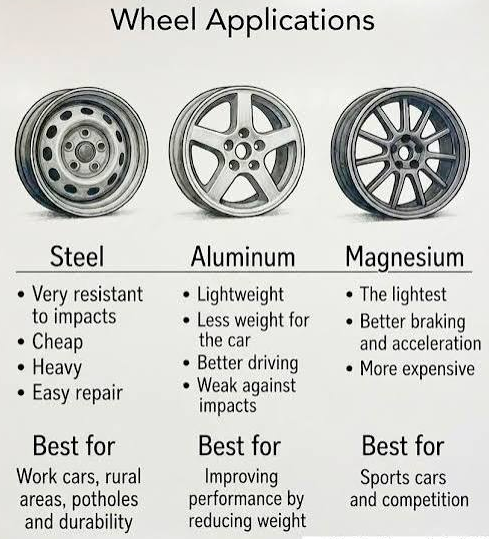
Car Alloy Wheels are primarily made from an aluminum alloy (often containing around 97% aluminum mixed with elements like silicon or magnesium). The most common manufacturing method is low-pressure die casting, though high-end wheels can also be forged or flow-formed.
Step-by-Step Manufacturing Process (Casting Method)
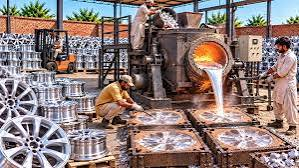
Melting the Metal: High-grade aluminum ingots are placed into an industrial furnace and heated to roughly 750°C until they completely liquefy (taking about 25 minutes), at which point chemical additives and hardeners are blended in.
Filtering and Mold Preparation: Before entering the mold, the molten aluminum flows through a high-temperature ceramic filter sheet to trap impurities and aluminum oxides.
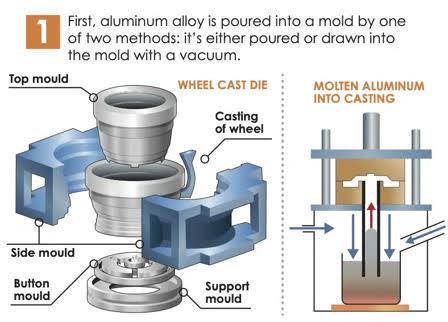
Bottom-Up Pressurized Injection: Unlike pouring metal from the top, low-pressure casting injects the liquid aluminum upward from the bottom of the steel mold. This bottom-up approach dramatically reduces air bubbles and structural defects.
Solidification and Cooling: The molten aluminum takes about 7 to 10 minutes to solidify inside the mold. Once the mold opens automatically, the newly cast wheel is submerged in lukewarm water for a few minutes to cool it down safely for handling.
Heat Treatment and Quenching: The wheel undergoes a critical 12-hour thermal treatment process, which often includes heating to around 500°C followed by a rapid water quench (around 80°C) to lock in strength and durability.
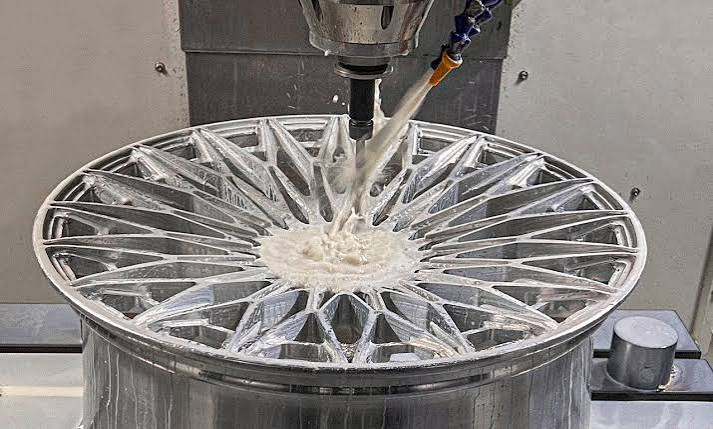
Machining and Precision Shaping: A robotic mechanism or CNC lathe with diamond-tip tools shaves off excess material, drills bolt holes, and carves out the fine details of the spokes and edges with sub-millimeter precision.
Quality Control and Testing: Wheels are checked using Coordinate Measuring Machines (CMM) for dimensions, X-ray scanning for internal micro-porosity, and Finite Element Analysis (FEA) or impact/fatigue tests to ensure structural integrity.
Surface Finishing and Coating: Finally, the wheels are cleaned, powder-coated, painted, or clear-coated to provide a stylish bare-metal or colored finish that resists road grime and corrosion. Machining process
Alternative Production Methods
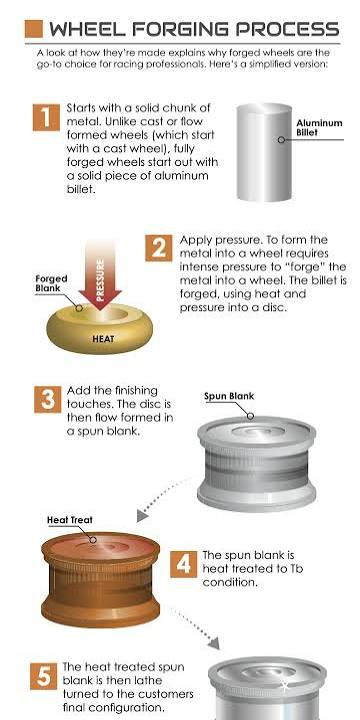
Forging: Made from a solid block (billet) of aluminum that is mechanically pressed, heated, and hammered under extreme pressure to realign the metal's grain structure. Forged wheels are lighter and significantly stronger, though much more expensive. There are a variety of forged construction options including monoblock and multi-piece wheels. Each offers its own set of advantages.
Monoblock
forgingForging method
Flow Forming: Starts with a low-pressure cast wheel base and uses spinning rollers with heat and pressure to stretch and compress the barrel. This hybrid method increases tensile strength while keeping costs lower than full forging. FLOW FORM
Flow Forming
Flow form wheels are made by applying heat and pressure to extrude a cast wheel face along a flow form spool to create the size and dimensions of the final wheel. The heat and pressure of the extrusion process realign the molecular structure of the aluminum making the material stronger. This results in a stronger wheel that is 15% lighter than a one-piece cast wheel. The strength of flow form wheels make them a great choice for “spirited” driving.
There are several benefits to light weight wheels including:
Finally, the wheels are cleaned of tiny metal burrs and sent to the paint line. Depending on the styling, they are finished using specialized methods:
Powder Coating & Spraying: Protects the wheel from road salt and oxidation.
Diamond Cutting: A precision lathe shaves a micro-layer off the face of the wheel to leave a high-shine, bare-metal finish contrasted against painted accents.
Clear Sealing: A final clear coat is baked on to protect the bare metal from corrosion over time.
Comments (0)
No comments yet. Be the first to share your thoughts.
Comments (0)
No comments yet. Be the first to share your thoughts.