How It's Made
How It's Made: Bottled water production
July 1, 2026 · 33 views ·by Odeyemi Oluwafemi
A bottling plant is an industrial facility where liquids, such as beverages, water, or oils, are packaged into bottles or cans and sealed for distribution. These automated operations maintain food-grade safety and mass-produce thousands of ready-to-market products per hour.
Disposable plastic water bottles are made through a process called Injection Stretch Blow Molding (ISBM), which turns tiny plastic pellets into fully formed containers. This method relies primarily on Polyethylene Terephthalate (PET) plastic because it is lightweight, durable, and completely safe for food and drinks.
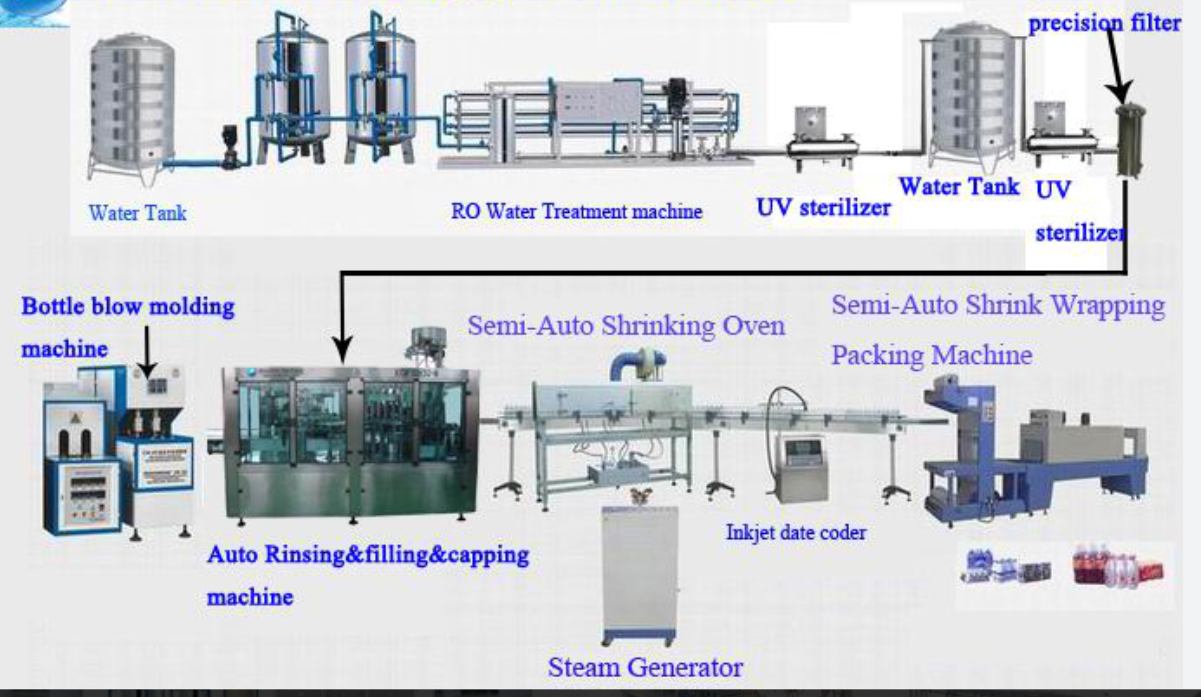
1. Creating the "Preform"
- Melting Resins: Raw PET plastic pellets are fed into a machine and heated to roughly
- 600°F (315°C) until they turn into a thick liquid.
- Injection Molding: The liquid plastic is injected under high pressure into molds.
- The Test-Tube Shape: This forms a "preform," which looks like a thick, miniature plastic test tube with the threaded bottleneck already perfectly molded at the top.
- Rapid Cooling: Internal cooling systems instantly harden these preforms so they can be moved to the next step.
- 2. Blowing the Bottle
- Reheating: The hardened preforms travel down a conveyor belt through an infrared oven to become soft and pliable again.
- The Mold Clamp: The warm preform is placed inside a final bottle-shaped mold.
- Air Inflation: A high-pressure blast of compressed air is shot into the middle of the
- preform. Like a balloon, the plastic expands rapidly until it takes the exact shape of the outer mold walls.
- Trimming and Cooling: The mold quickly chills the plastic to lock in its shape, and any excess flash plastic is trimmed off.
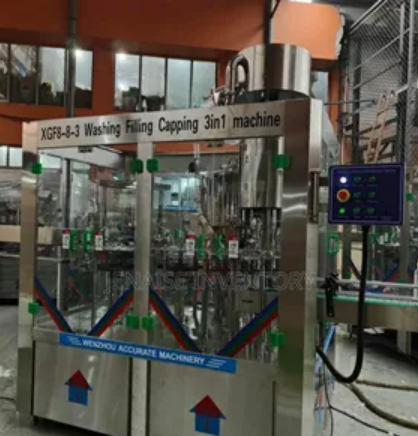
- 3. Washing, Filling, and Capping
- Sanitization: Automated factory machines thoroughly rinse and sterilize the inside of the empty bottles.
- High-Speed Filling: The bottles pass through an ultra-clean filling room where purified water is shot in at extreme speeds.
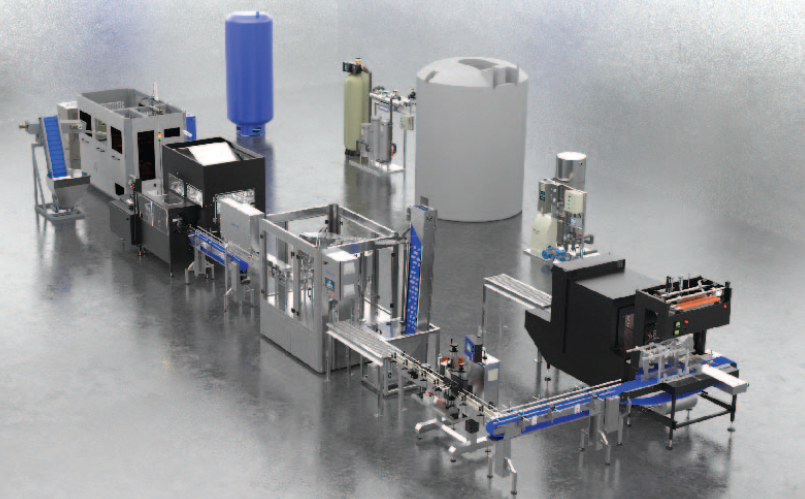
Bottling plant - How Reusable Water Bottles Differ
If you are using a heavy-duty reusable bottle instead of a thin disposable one, the manufacturing methods change based on the material:- Reusable Plastic (e.g., Nalgene): These utilize wider injection blow molds with dense, BPA-free plastic compounds. Air is forced in at up to 150 PSI to achieve thick, impact-resistant walls.
- Metal (Aluminum or Stainless Steel): These start as a solid metal puck or disc. A massive hydraulic press forcefully punches the metal to stretch it out into a seamless cylinder, which is then progressively narrowed at the top to shape the bottleneck.
- ( for implementation and machinery/equipment contact www.evionis.ng)
- How Reusable Water Bottles Differ
Comments (1)
Impressive