Education
💡 Innovation and Creativity: The Fundamentals of Deep Listening and Cross-Pollination
July 2, 2026 · 8 views ·by Odeyemi Oluwafemi
---All things are difficult before they are easy (Thomas Fuller)
---The only difference between success and failure is the ability to take action (Graham Bell)
---The only difference between success and failure is the ability to take action (Graham Bell)
▶ Watch the video cross pollinated ideas
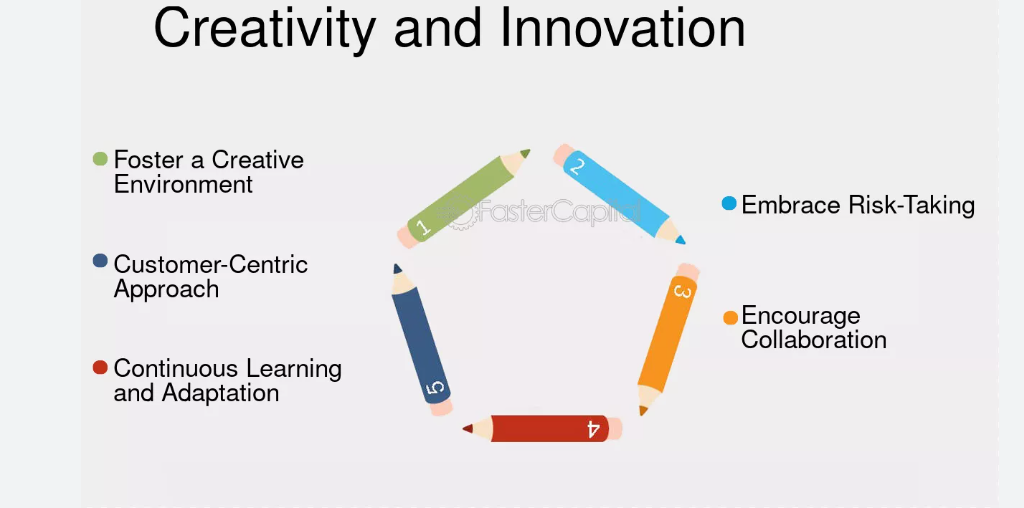
The principles resonate deeply.
The best solutions emerge from a combination of deep listening which truly grasp the underlying needs of individuals and cross-pollination that involves integrating ideas from diverse fields.
In order to foster innovation, there is need for rapid prototyping that emphasizes testing small concepts quickly, and allowing for swift failures and iterations.
A commitment to human-centered design that prioritizes the experiences and perspectives of people throughout the development process is required.
Innovation does not happen in a vacuum. It relies on connecting existing ideas in novel ways. Deep listening and cross-pollination are the foundational behaviors that drive this creative process. Deep listening allows you to absorb high-quality data from your environment. Cross-pollination takes those insights and merges them across different fields to create breakthroughs.
· Deep listening is crucial; it’s amazing how often we overlook the underlying needs.
· Cross-pollination opens up so many creative avenues; it’s like finding hidden gems in unexpected places.
· Rapid prototyping is a game changer; it allows us to learn quickly and pivot when necessary.
· And yes, human-centered design is the heartbeat of innovation; keeping people at the core ensures we’re creating meaningful solutions.
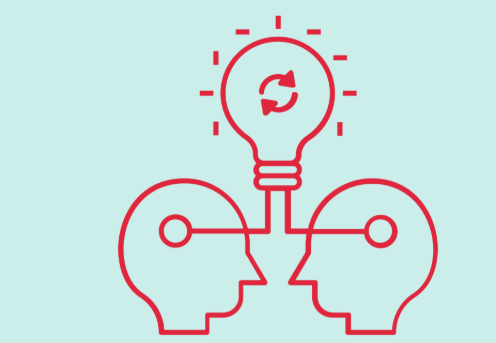
The Power of Cross-Pollination of ideas💡
Cross-pollination is the sharing of knowledge, tools, and cultures across unrelated industries or disciplines. It prevents echo chambers and introduces fresh perspectives.
- Analogy Thinking: Apply solutions from one industry to another.
- Diverse Teams: Mix experts from entirely different fields together.
- Interdisciplinary Learning: Study topics outside your core expertise.
- Serendipitous Spaces: Design workspaces that encourage accidental interactions.
- Boundary Spanning: Act as a bridge between separate communities.
Idea Shuffling: Force-combine two unrelated concepts to innovate.
According to Thomas Fuller, all things are difficult before they are easy, this encapsulates the universal experience of overcoming challenges. Initially, new tasks or skills often appear daunting due to unfamiliarity and the learning curve involved. This initial struggle is a natural part of the process, as it requires effort, persistence, and adaptation. Over time, with practice and experience, these once difficult endeavors become more manageable and even second nature. This transition highlights the importance of perseverance, as the difficulties faced serve as stepping stones to mastery and ease. Embracing this journey can lead to personal growth and increased confidence in tackling future challenges.

🏛️ The Foundation of Deep Listening
Deep listening is the practice of listening with total focus and intent, going beyond the literal words spoken to understand the underlying emotions, needs, and unstated motivations. In the context of innovation, it moves you away from assuming what people want and allows you to discover what they actually need.
Suspending Judgment: True deep listening requires pausing your internal commentary, biases, and the urge to immediately problem-solve. This creates a safe space for radical or unconventional ideas to surface.
Listening for the "Unsaid": Innovators use deep listening to identify friction points, frustrations, and latent desires that customers or teammates might not explicitly state.
Empathetic Engagement: By focusing on the speaker's emotional reality, you gain deep user empathy. This is the cornerstone of Design Thinking and human-centered innovation.
🐝 The Mechanics of Cross-Pollination
🐝 The Mechanics of Cross-Pollination
Cross-pollination is the act of taking ideas, methodologies, or technologies from one industry, culture, or discipline and applying them to another. Just as bees carry pollen between flowers to create new life, innovators carry concepts between fields to create entirely new solutions.
Diverse Inputs: Innovation thrives on cognitive diversity. Interacting with people outside your immediate field introduces fresh perspectives that break through industry-specific echo chambers.
Analogy and Metaphor: Cross-pollination relies heavily on metaphorical thinking. For example, the inventors of Velcro looked at how burrs stuck to dog fur; the designers of the Shinkansen bullet train looked at the beak of a kingfisher to reduce noise.
Recombining Existing Concepts: Most breakthrough ideas are not entirely new; they are novel combinations of existing elements. Combining cellular technology with photography gave us the smartphone.
🔄 The Intersection: How They Work Together
🔄 The Intersection: How They Work Together
Deep listening and cross-pollination form a powerful innovation loop.
  Deep Listening              Cross-Pollination              Innovation
(Identifies the Need)  ───►  (Brings the Solution)  ───►  (Creates the Breakthrough)
Deep listening identifies the hidden core of a problem. It ensures you are solving the right human need rather than a superficial symptom.
Cross-pollination introduces unexpected toolkits to solve that problem. It prevents you from using the same tired formulas your competitors are using.
Comments (3)
Relating concepts play a major role in Engineering inventions
Relating concepts play a major role in Engineering inventions
Absolutely true