Technology
Markov chain and Machine learning: The Memoryless Possibility
August 31, 2026 · 17 views ·by Odeyemi Oluwafemi
We are just waves in time and space, changing continuously, and the illusion of individuality is produced through the concatenation of the rapidly succeeding phases of existence. What we define as likeness is merely the result of the symmetrical arrangement of molecules which compose our body.
Nikola Tesla
The present is a limitless continuous presence.
(Ódeyemi )

▶ Watch the video , Markov chains
A Markov Chain is a probabilistic, memoryless mathematical model where the probability of future events depends solely on the current state. In machine learning, this simple concept powers sequential data tasks like text prediction, reinforcement learning, and sampling complex probability distributions.
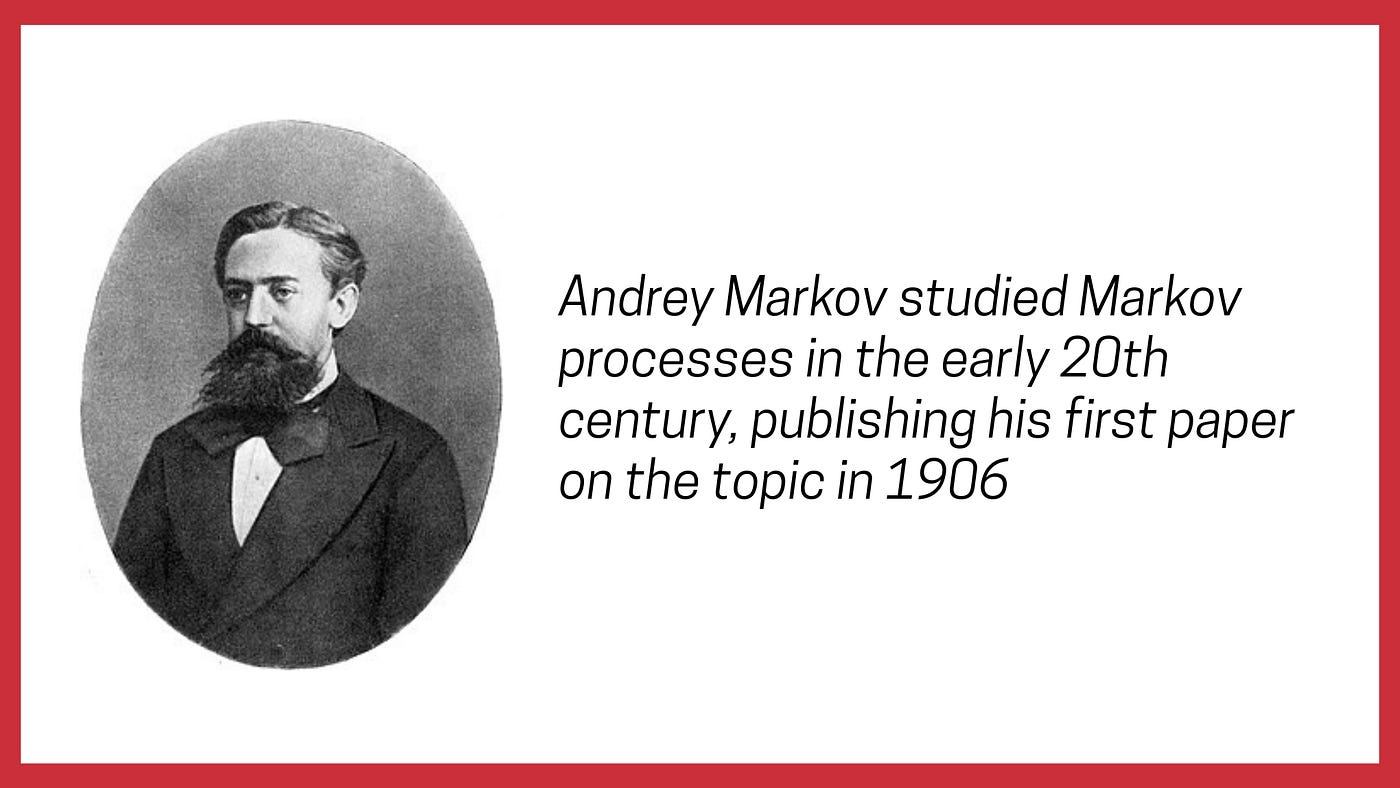
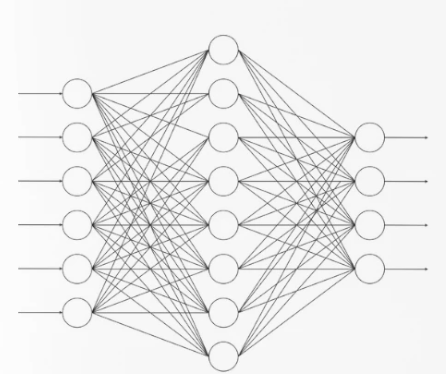
Classic Markov chains are discrete and rely heavily on manual state definitions or sequence probabilities (like n-grams) to predict the immediate next step. Modern AI, such as Transformers or Deep Neural Networks (used in ChatGPT), looks at vast swaths of context rather than just the immediate prior state, allowing for far more complex and creative text generation .
where the next step depends only on the current state, not the past. This memoryless rule helps machine learning handle complex data like text, games, and random movement with less computer power.
Markov chains and machine learning intersect deeply through the concept of the Markov property, commonly known as memorylessness. This mathematical framework states that the future state of a system depends entirely on its current state, completely ignoring the historical path that led there.
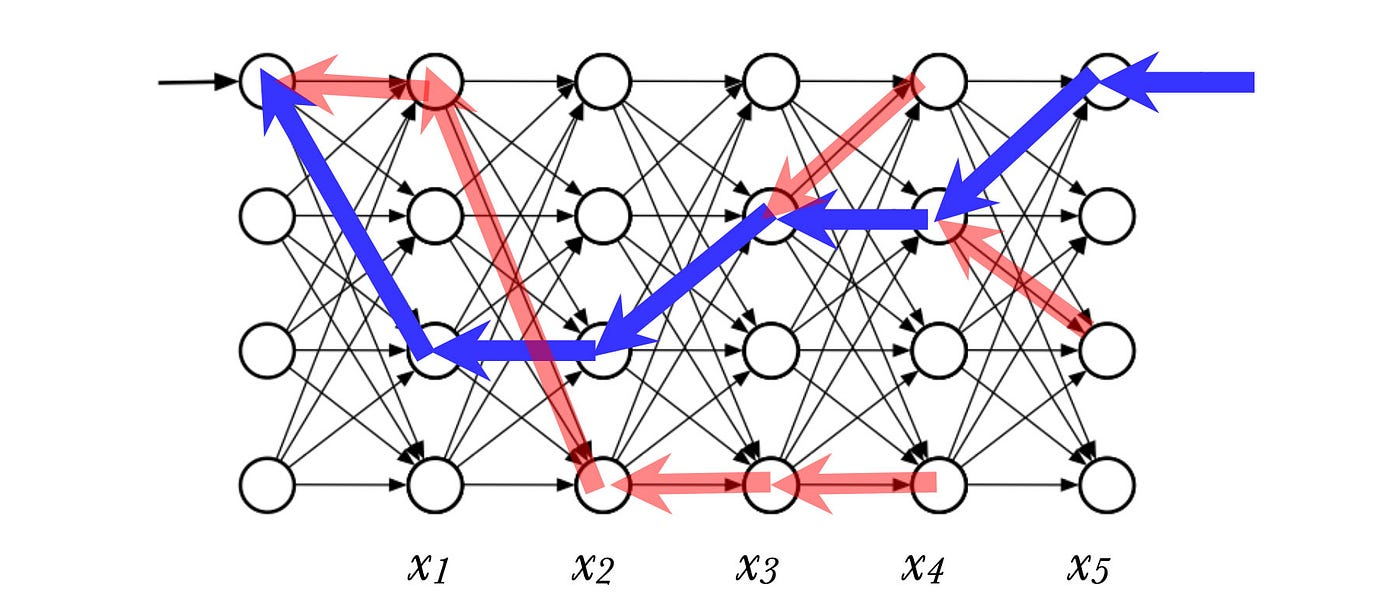
A Markov chain or Markov process is a stochastic model describing a sequence of possible events in which the probability of each event depends only on the state attained in the previous event. Informally, this may be thought of as, "What happens next depends only on the state of affairs now."
Stochastic possibilities refer to the range of potential outcomes governed by random, probabilistic variables rather than a single fixed path. Instead of predicting an exact future, a stochastic approach maps out a cloud of possible trajectories and their respective likelihoods
Core Concepts
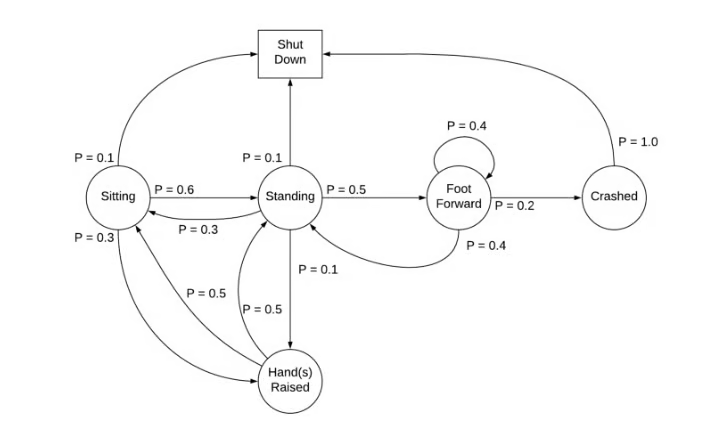
State: The exact condition of a system right now.
Transition: The chance of moving from one state to another.
Simplicity: Cuts down heavy data needs by ignoring old history.
Building Blocks: Forms the base for Hidden Markov Models and Reinforcement Learning.
Real-World Uses: Powers text prediction, stock trends, and web page ranks.
How Memorylessness Powers Machine Learning
While sophisticated modern models like Transformers rely heavily on capturing long-range context, memoryless systems remain vital across several machine learning subfields:
- Reinforcement Learning (RL): The core framework of RL—the Markov Decision Process (MDP)—operates on the assumption that the environment's response to an agent's action depends only on the current state. This enables self-driving cars, robotics, and gaming AI to make real-time decisions without recalculating every historical movement.
- Hidden Markov Models (HMMs): When the true states of a system are invisible, HMMs predict them based on observable, memoryless sequences. This underpins foundational applications in speech recognition, bioinformatics (DNA sequencing), and part-of-speech tagging.
- Search and Recommendation Engines: Google's original PageRank algorithm models internet browsing as a massive Markov chain matrix. The algorithm views a user clicking through links as a "random surfer" whose next click relies only on the current webpage they are viewing.
- Generative Text Models (N-grams): Before deep learning, early language generators estimated the probability of the next word using a fixed window of preceding text (a higher-order Markov chain), creating fast, lightweight auto-predict systems.
Machine learning engineers often bypass the strict constraints of memorylessness without discarding the math of Markov chains. This is achieved by:
- Expanding the State Space: By redefining a single "state" to include an ordered tuple of past states (e.g., State = [Yesterday, Today]), a model gains an artificial memory window while mathematically retaining its single-step Markov properties.
- Hybrid Architectural Approaches: Modern systems frequently pair Markov models with deep networks, allowing an LLM (Large Language Model)or Recurrent Neural Network (RNN) to parse long-range contexts while a Markov layer handles efficient, localized probabilistic sampling.
Let the future tell the truth and evaluate each one according to his work and accomplishments. The present is theirs; the future, for which I really worked, is mine.
Nikola Tesla
Comments (0)
No comments yet. Be the first to share your thoughts.