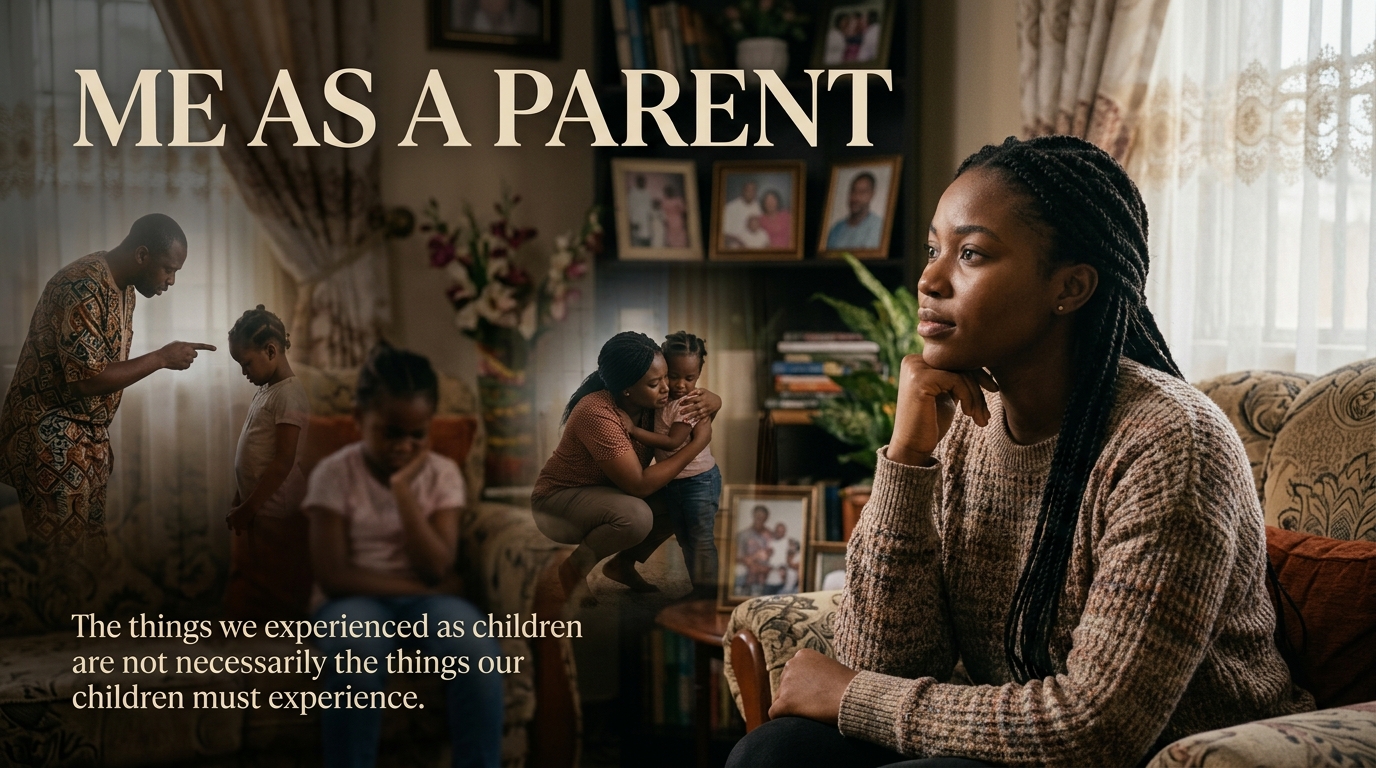
Every child has probably imagined what kind of parent they will become someday. And if you listen closely, you will discover that some of these children already have a complete parenting policy, including rules their future children will never have to experience.
“Me, I will never beat my children for making a mistake.”
“My children will be allowed to explain themselves.”
“My child will never hear, ‘Because I said so!’ without an explanation.”
And just like that, a new generation of parents is being planned before some of us have even finished growing up!
Growing up came with its own collection of experiences. Some were beautiful, some taught us important lessons, and others left us wondering why things had to be that way.
Remember being scolded for crying after being punished? You were already hurt, but crying somehow became another offence. The punishment was one problem; explaining why you were crying was another!
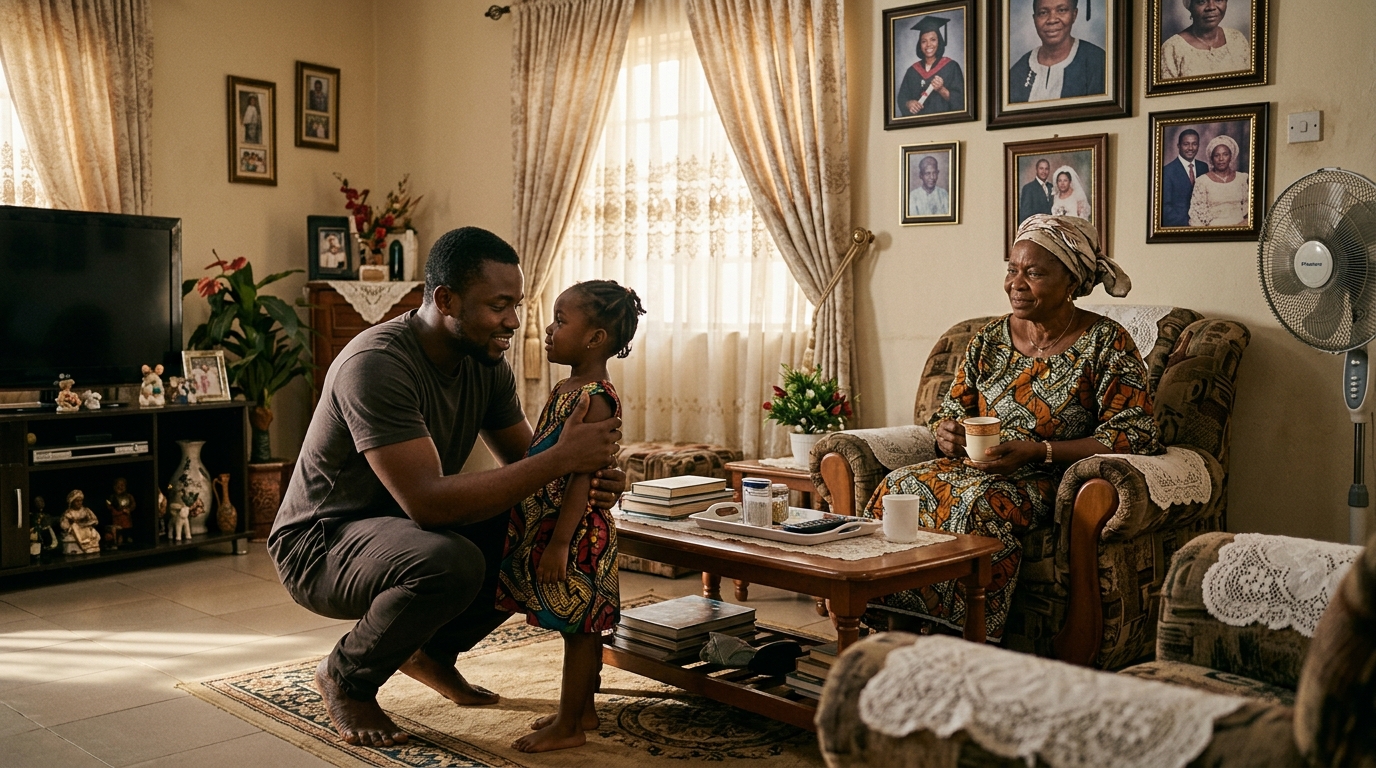
PARENT LISTENING TO A CURIOUS CHILD. Then there was the famous parental statement: “When you get to my age, you will understand.” We heard it when asking questions, expressing disagreement, or trying to understand a decision. Now, some of us are promising that our future children will be allowed to ask questions without automatically being labelled stubborn or disrespectful.
And who remembers being told, “Go and bring that thing,” only to discover that the thing was a cane? Suddenly, the entire journey became an exercise in negotiation, prayer, and strategic thinking!
There were also those moments when adults discussed your mistakes in front of visitors, relatives, and sometimes the entire neighbourhood. You could be standing there, wishing the ground would open up. Today, many young people say they want to correct their children privately and protect their dignity, even when discipline is necessary.
For some children, affection was not always expressed openly. You could be loved deeply and still struggle to hear the words “I'm proud of you” or receive a comforting hug after a difficult day. Now, many young people are imagining homes where their children will feel safe expressing their emotions, asking for comfort, and talking about their problems without fear.
That sentence has followed many children through school, family gatherings, and even adulthood. Someone was always getting better grades, behaving better, or achieving something that became a reason to question your own progress. Some of us have already decided that our future children will be encouraged to grow at their own pace rather than constantly being measured against somebody else's child.
Perhaps one of the biggest promises today's children are making is this: “My children will not be afraid of me.”
They want to be respected without being feared. They want their children to understand boundaries without feeling that every mistake could cost them their parents' love. They want to listen before judging, explain instead of simply demanding obedience, and correct without humiliating.
Of course, not everything our parents did was wrong. Many were raising children with the knowledge, resources, and experiences available to them. Some believed strictness was the best way to prepare us for a difficult world. Others were repeating the parenting methods they had experienced themselves.
They made sacrifices, provided for us, protected us, and taught us lessons that we may appreciate even more as we grow older. And some of the things we complained about as children may eventually make more sense to us.
Still, understanding our parents does not mean we must repeat every method they used.
We can appreciate their sacrifices while improving on the things that hurt us. We can teach discipline, respect without intimidation, and responsibility without making children afraid to ask for help. WHAT'S YOUR IMAGE OF YOU AS A PARENT? And perhaps that is what “Me as a parent” is really about.
It is not about promising to raise perfect children or believing we will never make mistakes. It is about recognising what we experienced, deciding what deserves to continue, and having the courage to change what does not.
Because one day, the children making these promises will become parents themselves. They will discover that parenting requires patience, sacrifice, difficult decisions, and a lot more than saying, “My children will never experience what I experienced!”
The real test will be whether they can turn those promises into everyday actions.
So, if you could change one thing about the way you were raised, what would it be?
And when your own children arrive, will you remember the promises you made when you were still a child?
Comments (0)
No comments yet. Be the first to share your thoughts.


Comments (0)
No comments yet. Be the first to share your thoughts.