Education
Misjudgment is the recipe for Disasters :Cobra effect and Kruger Effect
June 26, 2026 · 9 views ·by Odeyemi Oluwafemi
The Cobra effect and The Dunning–Kruger effect
When human misjudgment combines with cognitive biases like the Dunning-Kruger Effect and systemic blind spots like the Cobra Effect, the results are often catastrophic. Together, they demonstrate how a lack of self-awareness and flawed problem-solving can severely derail intended goals
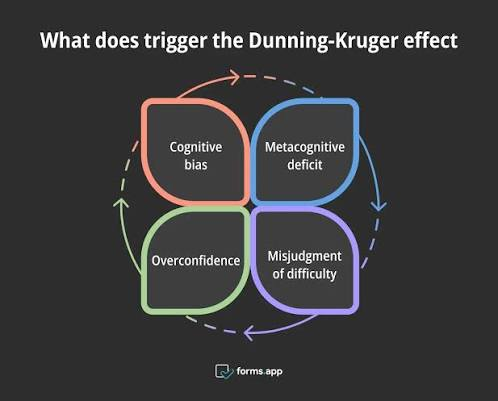
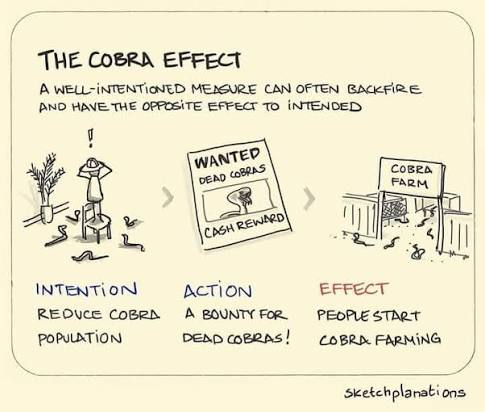
The Cobra effect refers to a situation where an attempted solution to a problem actually exacerbates the issue, exemplified by a historical instance in British India where a bounty on cobras led to increased breeding of the snakes for profit, ultimately resulting in more cobras being released into the wild. In contrast, the Dunning–Kruger effect is a cognitive bias wherein individuals with low ability at a task overestimate their competence, while those with higher ability may underestimate their skills; this phenomenon highlights the disconnect between actual performance and self-assessment, often leading to poor decision-making and a lack of awareness regarding one's limitations. Both effects underscore the complexities of human behavior and the unintended consequences that can arise from misjudged interventions and self-perceptions.
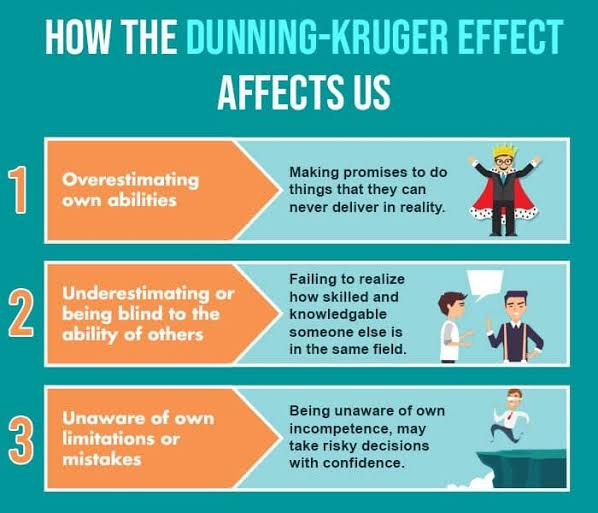
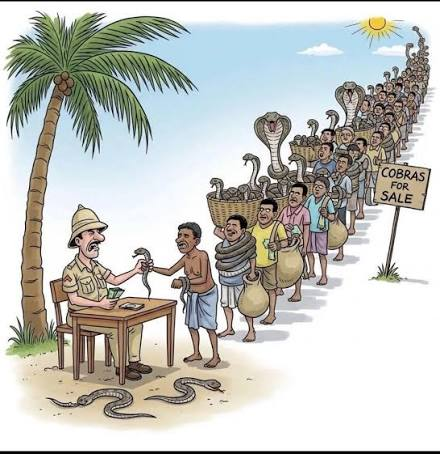
Disasters frequently occur when leadership or individuals fall victim to both phenomena. Someone affected by the Dunning-Kruger effect designs a policy or intervention based on overconfidence and limited understanding (misjudgment). Because the system's underlying human incentives are ignored, a Cobra Effect occurs, worsening the original crisis .
there is a sharp connection between two very different but equally destructive human tendencies: the Cobra Effect (policy backfiring due to misaligned incentives) and the Dunning–Kruger Effect (overconfidence born of incompetence). When they collide, the fallout can be spectacularly damaging.
there is a sharp connection between two very different but equally destructive human tendencies: the Cobra Effect (policy backfiring due to misaligned incentives) and the Dunning–Kruger Effect (overconfidence born of incompetence). When they collide, the fallout can be spectacularly damaging.
🔍 How They Interact
- Dunning–Kruger in leadership: A decision-maker with limited expertise believes they understand the problem well enough to design a solution. Their confidence outweighs their competence.
- Cobra Effect in systems: The solution ignores human incentives or unintended consequences. Instead of solving the issue, it amplifies it.
- Combined disaster: Overconfident leaders implement poorly thought-out policies, and the system reacts in ways they never anticipated — worsening the crisis.
⚡ Real-World Parallels
- Economic policies: Price controls often lead to black markets. Leaders who underestimate economic complexity (Dunning–Kruger) impose controls, triggering shortages and illicit trade (Cobra).
- Environmental interventions: Introducing species to control pests has sometimes led to invasive species crises. Overconfident planners misjudge ecological balance, and the system retaliates.
- Corporate management: A CEO with shallow understanding of employee motivation may impose “productivity incentives” that encourage corner-cutting or fraud, damaging the company long-term.
🎯 Why This Matters
The pairing of these effects is a cautionary tale:
- Self-awareness is crucial. Leaders must recognize their own blind spots.
- Systems thinking is non-negotiable. Policies must account for human behavior and unintended consequences.
- Feedback loops should be embraced. Testing, iteration, and humility prevent catastrophic misjudgments.
It’s fascinating — the Cobra Effect shows how systems punish naive interventions, while the Dunning–Kruger Effect shows how individuals overestimate their ability to intervene. Together, they’re almost a recipe for disaster.
Comments (0)
No comments yet. Be the first to share your thoughts.