Science
Optimization and Finite Element Analysis
July 4, 2026 · 8 views
FEA is vital for predicting how a 3D CAD model will behave under real-world conditions.
optimization is efficiency in output delivery. Areas of interest for analysis is broken into matrix or web and each section is treated as a mesh for ease of stress calculation, hence stress distribution on a surface is determined and areas of maximum stress point is identified.
Optimization and finite element analysis (FEA) are critical methodologies in engineering and design that enable the efficient evaluation and enhancement of structures and systems. FEA involves discretizing complex geometries into smaller, manageable elements, allowing for detailed stress, strain, and deformation analysis under various loading conditions. By integrating optimization techniques, such as topology optimization or parametric studies, engineers can refine designs to achieve optimal performance while minimizing material usage and costs. This synergy not only enhances the reliability and safety of products but also accelerates the development process across various industries, including aerospace, automotive, and civil engineering.
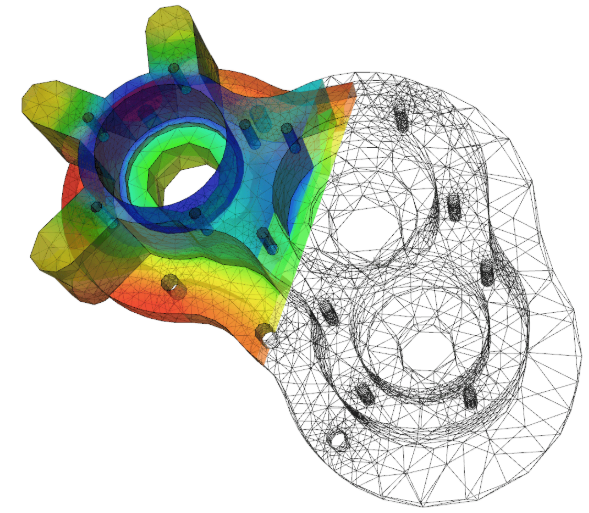
Finite Element Analysis (FEA) is a computerized numerical method used to predict how physical designs, structures, and components react to real-world forces, vibration, heat, and other conditions. It works by breaking a complex, continuous object into a grid of smaller, simpler pieces called a mesh, allowing engineers to solve complex partial differential equations and identify flaws before physical manufacturing.
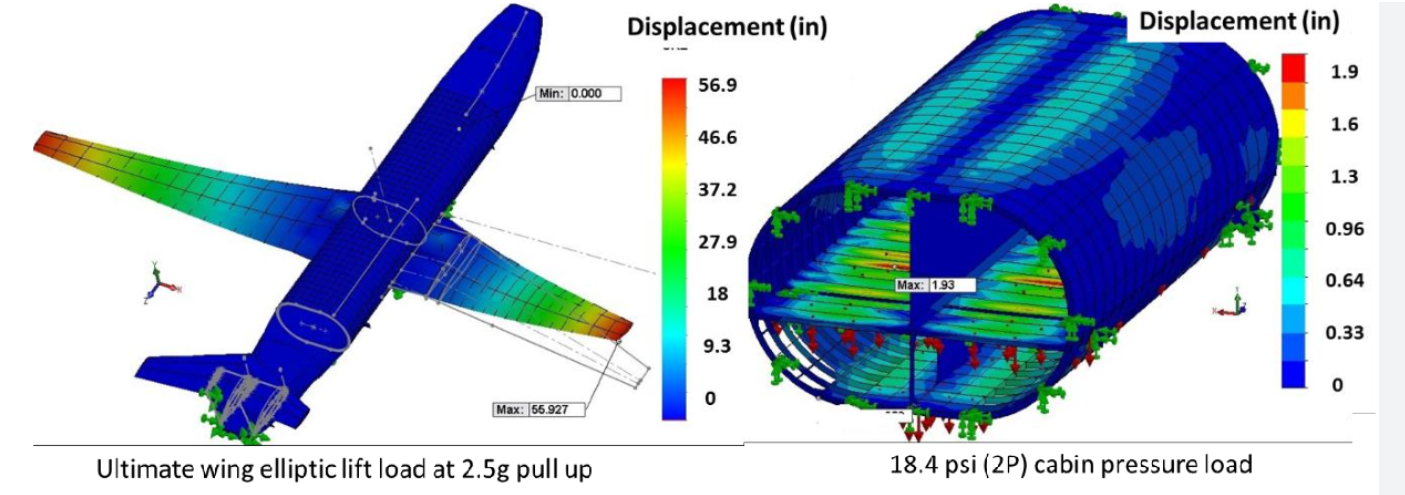
Commonly simulated effects include:
- Repeated impact or dynamic loading.
- Strain from sudden or prolonged forces.
- Thermal variations.
- Vibration and fatigue cycles.
- Pressure or fluid interactions.
The whole aim of FEA is about optimization of design for cost saving, reduced waste and improve efficiency and also tuned for increased mechanical stress.
flaws in design is identified at the earlier stage of drafting before manufacturing.
How FEA Works
The process of finite element analysis revolves around three distinct stages:
- Pre-processing: A 3D CAD model is loaded into simulation software and discretized (divided) into a mesh. Engineers then apply material properties, boundary conditions (where the object is fixed), and external loads (such as pressure or gravity).
- Solution: The computer applies mathematical equations F = KU (where F is force, K is the stiffness matrix, and U is displacement) to calculate the physical behavior of each element. These are all assembled to simulate the entire system.
- Post-processing: The software generates a visual output—usually a color-coded gradient—that shows stress, strain, temperature, and deformation hotspots so the engineer can optimize the design.
Aim of Finite Element Analysis are:
Predict failure.
Design validation.
Determine factor of safety in design.
Optimization
Areas of Application
1.Shipping industries: load distribution of a ship's hull and structural members
2. Aero Space industries : stress distribution on Fuselage
3. Mechanical components industries: , Fracture and fatigue testing, Pressure and loading analysis on a containment system like pressure vessels, tanks, pipes.
Software application and skills required
software training and and academic training on stress and strain analysis is required to understand stress distribution on a mechanical component.
software such as Abaqus, ANSYS, SolidWorks, SimScale, Creo.
Comments (0)
No comments yet. Be the first to share your thoughts.