A combinational, sequential, and empirical reasoning is what we need in order to see opportunities [ ódeyemi ]
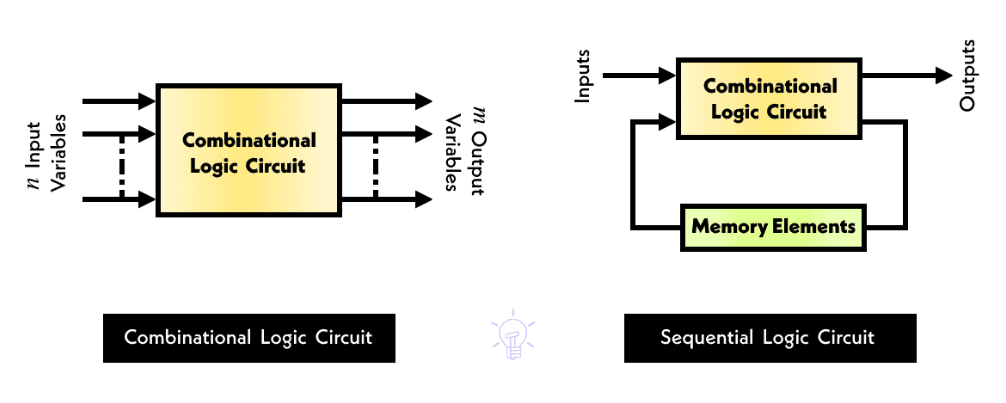
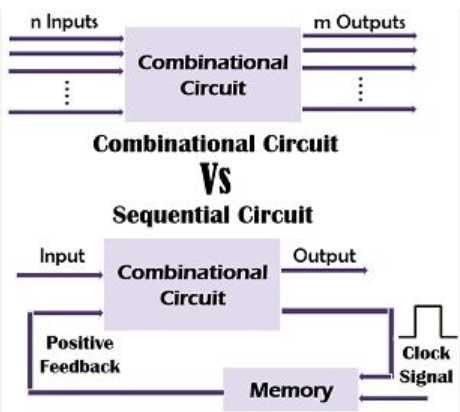
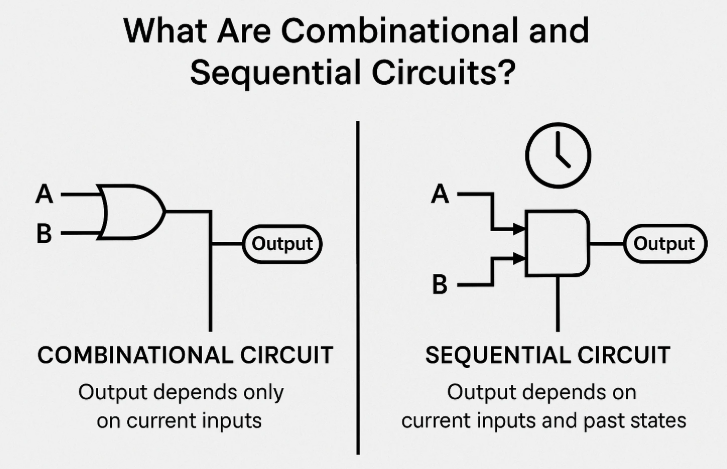
Combinational and sequential The primary difference between combinational and sequential logic is memory: combinational logic produces outputs based solely on the current inputs, while sequential logic relies on both current inputs and a stored history of past states.
Combinational Logic:
Dependency: Output is a pure function of the present inputs.
If inputs change, the output changes instantly.
Memory: Does not have memory or feedback loops; it cannot store data
Clock Signal: Does not require a clock signal
Common Examples:Multiplexers, encoders, decoders, and adders/ALUs used in arithmetic calculations
Sequential Logic:
Dependency: Output depends on current inputs and past states
Memory: Employs memory elements such as flip-flops and latches to store the state of the circuit and utilizes feedback paths
Clock Signal: Almost always requires a clock signal to synchronize state changes and time events
Common Examples: Registers, counters, and Finite State Machines (FSMs)
Comments (0)
No comments yet. Be the first to share your thoughts.