Business
THE BUSINESS OF FOMO: WHY “LAST 3 LEFT” WORKS
August 18, 2026 · 11 views ·by Emma-Golden
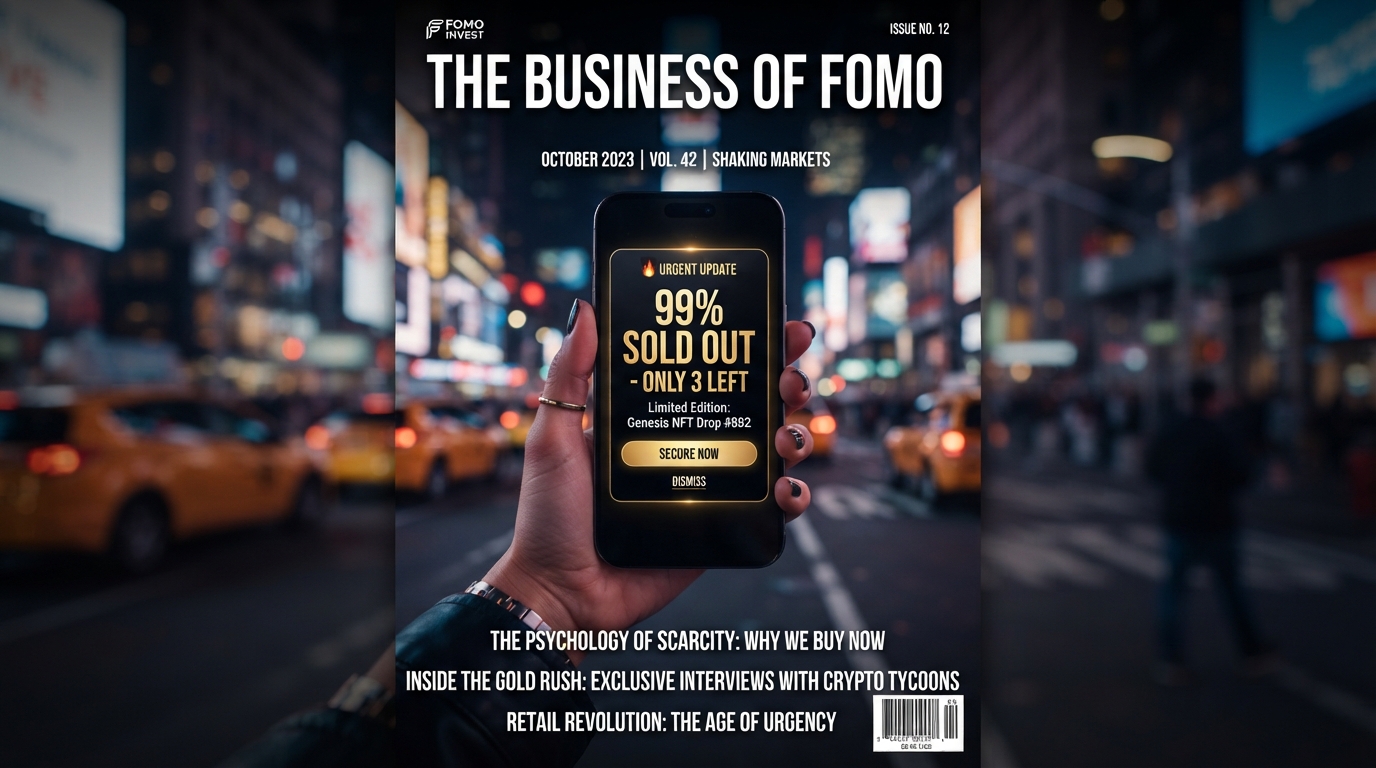
THE BUSINESS OF FOMO: WHY “LAST 3 LEFT” WORKS
“Only 3 left.”
“Offer ends tonight.”
“Last chance.”
“Limited edition.”
“Don't miss out.”
You've probably seen these messages countless times.
And sometimes, you've bought something you weren't even planning to buy.
Why?
Because the possibility of missing out can be surprisingly powerful.
Welcome to the business of FOMO.

FOMO means Fear Of Missing Out.
In everyday life, it can describe the feeling that everyone else is experiencing something valuable while you're being left behind.
Businesses understand this feeling very well.
That's why scarcity and urgency appear so often in marketing.
The message isn't simply:
“Here is a product.”
It becomes:
“Here is an opportunity, but you might lose it.”
That changes the psychological situation.
SCARCITY MAKES THINGS FEEL MORE VALUABLE
Imagine two identical products.
The first one says:
“Available anytime.”
The second says:
“Only 3 available.”
Suddenly, the second product feels more urgent.
Why?
Because availability itself has become part of the value.
Humans often place greater importance on things that appear limited or difficult to obtain.
That doesn't necessarily mean the product is objectively better.
It means the possibility of losing access to it can make us pay closer attention.
URGENCY CHANGES THE DECISION
Without urgency, a customer can say:
“I'll think about it.”
Tomorrow becomes next week.
Next week becomes next month.
And eventually, the purchase disappears from their mind.
Urgency interrupts that delay.
A message such as:
“Sale ends at midnight.”
creates a deadline.
The customer now has a decision to make:
Buy now or potentially lose the opportunity.
That's powerful because businesses aren't only fighting competitors.
They're also fighting procrastination.
Social media has made this even stronger.
You see someone posting:
“Best concert ever!”
Then another person posts their outfit.
Someone else uploads videos from the event.
Suddenly, you're thinking:
“Wait… why didn't I go?”
The experience becomes more desirable partly because other people are already having it.
Businesses can use this same principle through:
- Customer testimonials
- Sold-out announcements
- Event countdowns
- Limited collections
- Trending products
- User-generated content
- “Almost sold out” notifications
The customer isn't only seeing the product.
They're seeing other people participating.
BUT THERE'S A BIG WARNING
FOMO works best when the scarcity is real.
If a business constantly says:
“LAST 2 LEFT!”
and somehow still has “LAST 2 LEFT” three weeks later, customers may eventually notice.
Fake urgency can damage trust.
Once customers believe a business is manipulating them, the strategy can produce the opposite result.
Instead of:
“I need this.”
they start thinking:
“They're trying to pressure me.”
And trust is much harder to rebuild than a sale is to make.
ETHICAL FOMO IS POSSIBLE
Businesses don't have to manipulate customers to use urgency effectively.
Real scarcity can be communicated honestly.
For example:
“Only 20 seats available because the venue has limited capacity.”
That's legitimate.
“Early-bird pricing ends Friday.”
That's legitimate if the price genuinely changes afterward.
“Limited-edition collection available while stock lasts.”
Again, clear and honest.
The principle isn't necessarily the problem.
Deception is.
WHY BUSINESSES SHOULD UNDERSTAND FOMO
Every customer has competing priorities.
They may want your product but keep postponing the decision.
A genuine deadline can help them make a decision.
But businesses should remember that urgency should complement value, not replace it.
If the only reason someone buys is because they're scared, the relationship may not last.
If they buy because they genuinely see value and understand that the opportunity is limited, you've created a much stronger reason to act.
THE BUSINESS TAKEAWAY
FOMO isn't just a social media trick.
It is an example of how psychology influences purchasing behaviour.
People don't only ask:
“Do I want this?”
Sometimes they also ask:
“What happens if I don't get this now?”
That second question can be incredibly powerful.
But the smartest businesses don't manufacture fear.
They create real reasons to act now.
Because the goal isn't simply to make someone afraid of missing out.
It's to make the opportunity valuable enough that they don't want to.
Comments (0)
No comments yet. Be the first to share your thoughts.