I think therefore I am, for I am a thinking thing, in Latin as cogito, ergo sum, was coined by the French philosopher René Descartes. "The limits of my language mean the limits of my world". (Ludwig Wittgenstein) Language is an expression of our thoughts (Odeyemi)
Sometimes the problem isn’t your thinking, but the issues is that it’s the language available to think with? . Language is an expression of reasonings.
Thinking language can refer to two entirely different concepts depending on the context: it is either the internal language your brain defaults to when processing thoughts, or the philosophical and psychological relationship between language structure and cognition
For most people, the language they think in is their native tongue, but this is not always a fixed rule.
The Multilingual Mind: Bilingual or multilingual individuals often switch thinking languages based on environmental context, emotional states, or specific tasks. For instance, someone might negotiate a business contract in English but automatically switch back to their native language to calculate or count numbers.
Mentalese: Cognitive scientists point out that we don't always think in spoken words. Instead, the brain often uses a wordless, subconscious mental code called "Mentalese" to arrange abstract concepts, feelings, and images before translating them into actual words.
The "Second Brain": When learning a new language, reaching true fluency means building a "second brain" where you connect foreign words directly to visual concepts, completely bypassing the need to mentally translate from your first language.
2. How Language Shapes How We Think In psychology, the specific structure of a language actively shapes how its speakers perceive and analyze the world around them.
English: Tends to foster analytical, linear, and action-oriented thinking.
Chinese: Encourages holistic, broad-perspective, and relationship-driven thought processes.
German: Sharply emphasizes rigid logic, strict structure, and heavy attention to detail.
Japanese: Prioritizes deep context, social relationships, and reading between the lines.
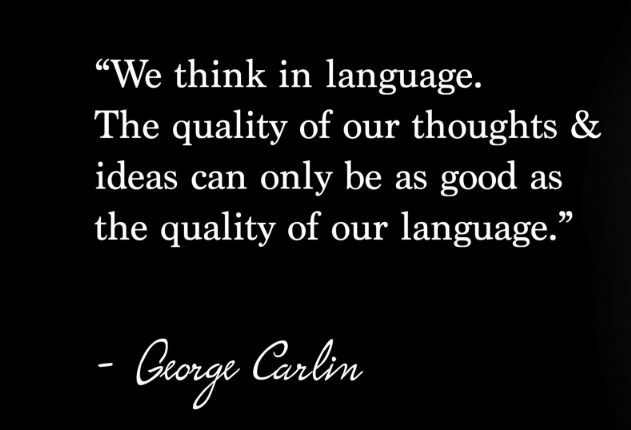
Yoruba language: Tends to be philosophical, societal class expression and warning signals Igbo language: Explores words as living, efficacious forces, rooted in the belief that "the spoken word is the human mind made visible", the language prioritizes speech to manifest reality and command destiny George Carlin
3. "Language for Thinking" (Educational Framework)
In childhood development, Language for Thinking is a structured learning methodology used by speech therapists and educators. It systematically transitions a child’s verbal reasoning from the concrete ("What is this object?") to the abstract ("Why did this happen?"), using visual scenarios to build critical reasoning and social inference
Comments (0)
No comments yet. Be the first to share your thoughts.
Comments (0)
No comments yet. Be the first to share your thoughts.