Business
When Demand Meets Supply: Why Some Businesses Boom While Others Struggle
October 26, 2026 · 10 views ·by Emma-Golden

When Demand Meets Supply: Why Some Businesses Boom While Others Struggle
Imagine two people opening shops on the same street.
One sells out before closing time, while the other goes home with nearly all the day's stock untouched.
Imagine two people opening shops on the same street.
One sells out before closing time, while the other goes home with nearly all the day's stock untouched.
Is one business owner simply luckier than the other?
Not necessarily.
The answer may lie in how well each business understands its customers and the market.
Not necessarily.
The answer may lie in how well each business understands its customers and the market.
The Danger of Selling What Nobody Wants
A business can have beautiful packaging, an attractive shop, and excellent customer service, yet struggle to make sales if people do not need its products at the price offered.
Demand matters because a business survives on customers who are willing and able to pay.
Before investing heavily in a product, smart entrepreneurs study what their target customers actually want.
Before investing heavily in a product, smart entrepreneurs study what their target customers actually want.

Now imagine a bakery whose bread is in high demand.
Customers keep arriving, but the bakery produces too few loaves to meet their needs.
Customers keep arriving, but the bakery produces too few loaves to meet their needs.
The business is losing potential sales because its supply cannot keep up with demand.
The opposite can also happen.
A shop owner may stock hundreds of winter jackets in a market where very few customers need them.
Too much stock and too little demand can tie up money, occupy storage space, and lead to losses.
A shop owner may stock hundreds of winter jackets in a market where very few customers need them.
Too much stock and too little demand can tie up money, occupy storage space, and lead to losses.
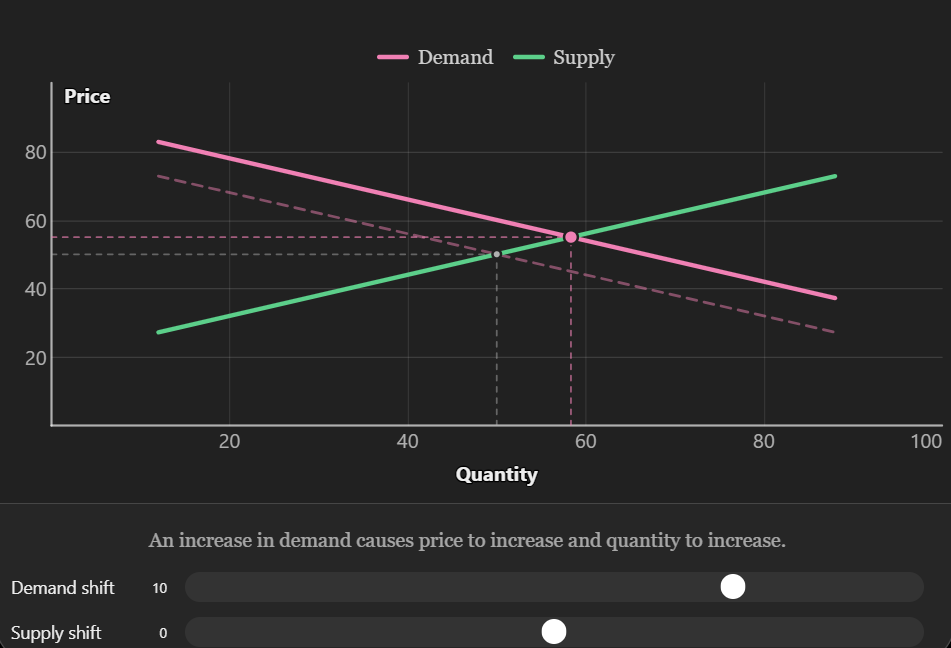
Successful businesses pay attention to three important things:
1. Study customer demand. Find out what people need, what they can afford, and what they are willing to buy.
2. Manage supply wisely. Stock enough to serve customers without tying up too much money in products that may not sell.
3. Watch market changes. Customer preferences, competitors, seasons, and production costs can change the balance between demand and supply.
The Lesson for Every Entrepreneur
Demand and supply are not just classroom concepts.
They influence decisions about what to sell, how much to produce, when to restock, and how to respond to changing prices.
They influence decisions about what to sell, how much to produce, when to restock, and how to respond to changing prices.
A smart entrepreneur does not simply ask, “What can I sell?”
They also ask, “Who needs it, how much do they need, and can I supply it profitably?”
Comments (0)
No comments yet. Be the first to share your thoughts.