Education
WHEN EDUCATION BECOMES A COMPETITION: ARE WE TURNING STUDENTS AGAINST EACH OTHER?
September 9, 2026 · 10 views ·by Emma-Golden
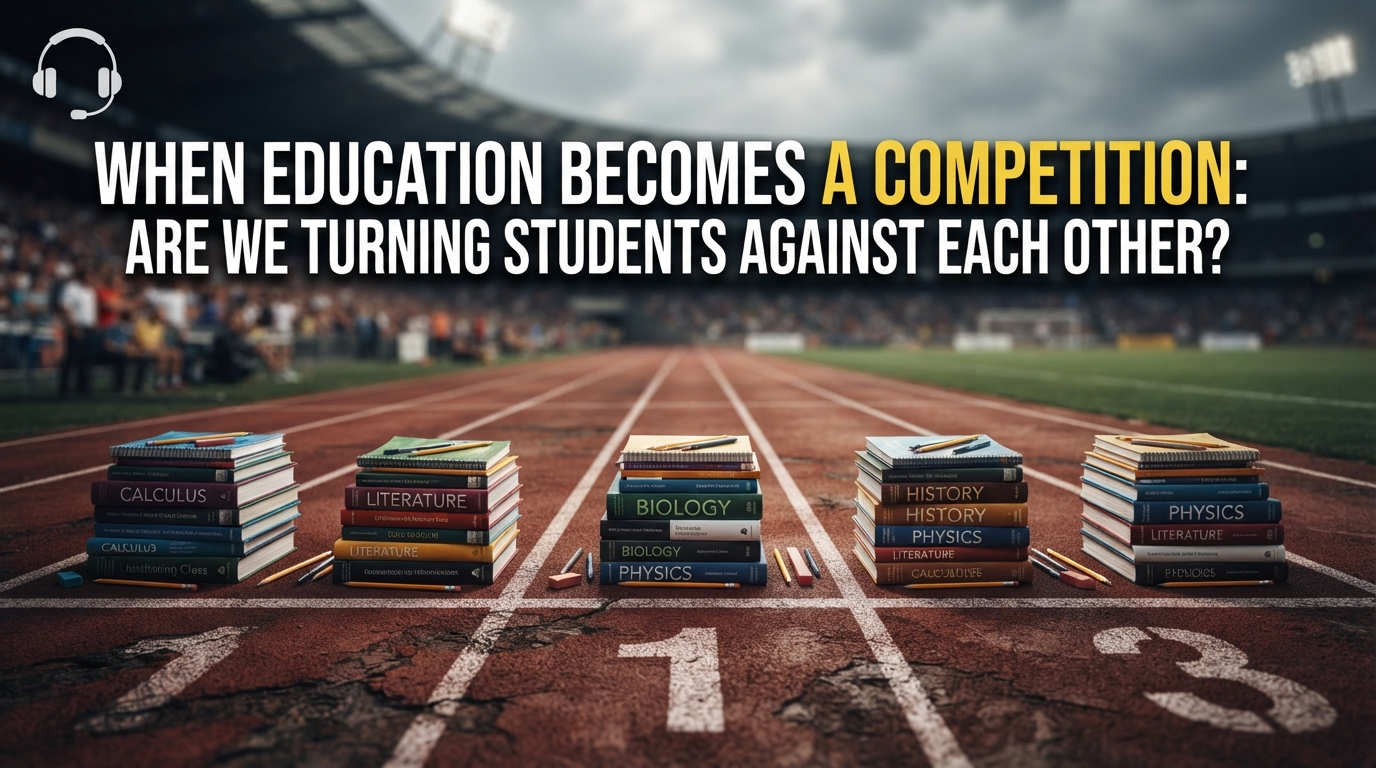
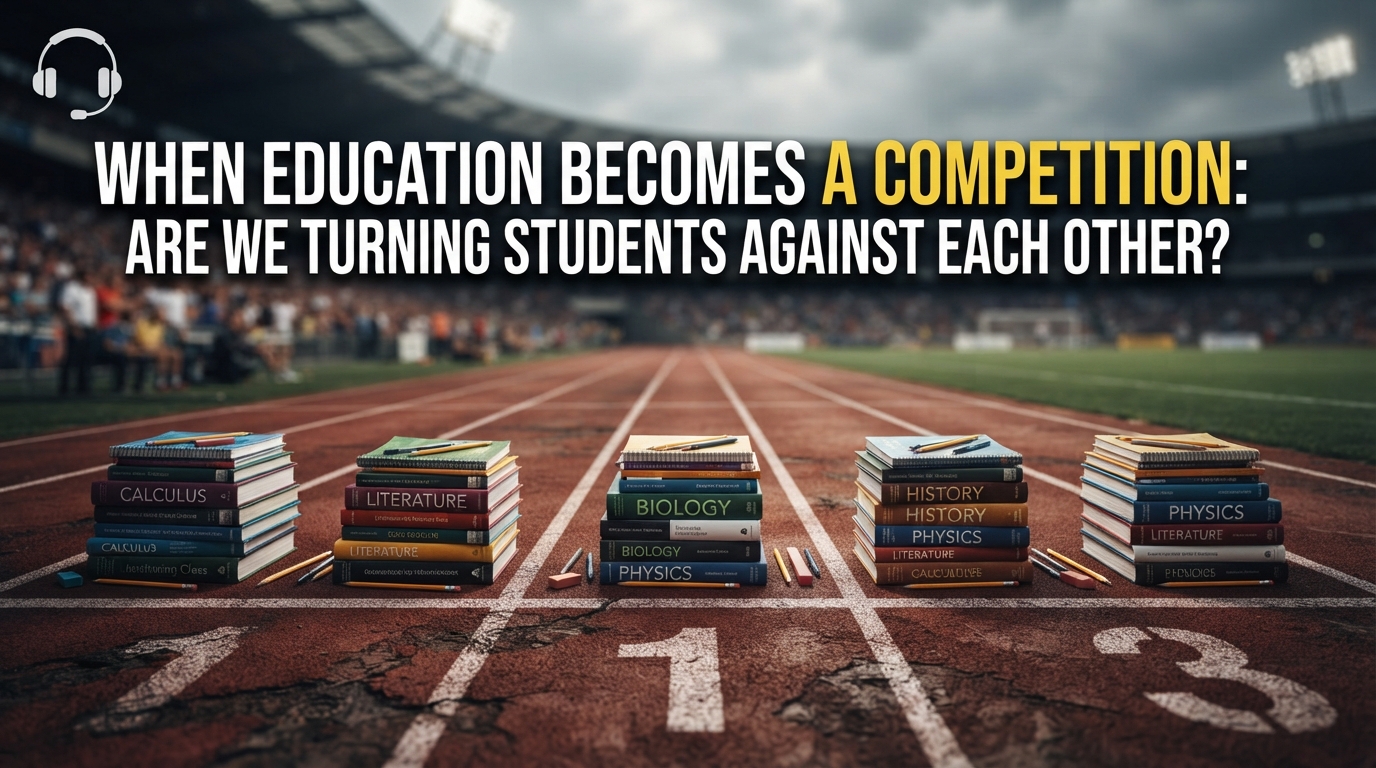
WHEN EDUCATION BECOMES A COMPETITION: ARE WE TURNING STUDENTS AGAINST EACH OTHER?
When Do We Start Turning Students Against Each Other Unknowingly ↩️
click the link to enjoy the audiobook⬆️
A student gets the highest score.
Everyone celebrates.
Another student comes second.
They are praised.
Someone comes tenth.
They are told they need to do better.
And somewhere in the classroom, another student begins wondering:
“Am I good enough?”
Competition has always been part of education.
But when does healthy motivation become unhealthy pressure?
COMPETITION CAN MOTIVATE
Competition isn't automatically bad.
A little competition can encourage students to work harder.
It can create goals.
It can inspire discipline.
It can push students to discover what they're capable of achieving.
The problem begins when academic performance becomes the primary measure of a student's worth.
WHEN NUMBERS BECOME IDENTITIES
Imagine a student who consistently scores 95 percent.
People begin calling them “the brilliant one.”
Another scores 55 percent.
People begin calling them “the average one.”
Over time, these labels can become identities.
The high-performing student may become terrified of failure because they believe their identity depends on always being excellent.
The struggling student may eventually stop trying because they believe they will never catch up.
Both students can be harmed by the same system.
PARENTS CAN UNINTENTIONALLY INCREASE THE PRESSURE
Parents usually want the best for their children.
But comparisons can sometimes create anxiety.
“Why can't you be like your brother?”
“Your friend got a better score.”
“You must come first.”
The intention may be motivation.
But the child may hear something completely different:
“I am only valuable when I succeed.”
Academic results don't always tell the full story.
Students have different learning environments.
Different resources.
Different challenges.
Different strengths.
Different levels of support.
Different ways of understanding information.
So comparing students as if everyone is starting from exactly the same position can be misleading.
WHAT HAPPENS TO COLLABORATION?
Education should also teach students how to work with others.
In the real world, success often requires teamwork.
People collaborate.
Share ideas.
Solve problems together.
Support colleagues.
Negotiate.
Communicate.
If students are constantly taught to see classmates only as competitors, they may miss the value of cooperation.
SUCCESS NEEDS A BROADER DEFINITION
Grades matter.
Academic achievement matters.
But education should also develop creativity.
Confidence.
Problem-solving.
Communication.
Leadership.
Empathy.
Curiosity.
Resilience.
A student who doesn't come first isn't necessarily failing.
And a student who comes first isn't automatically prepared for everything life will demand.
Perhaps education should ask a bigger question than:
“Who scored the highest?”
It should ask:
“Who is becoming capable, confident and prepared to contribute meaningfully to the world?”
Competition has its place.
But education should never become a race where students learn to measure their worth against everyone around them.
The goal of education should not simply be to produce winners. It should be to help every learner discover what they can become.
Comments (0)
No comments yet. Be the first to share your thoughts.