Education
WHEN SCHOOL ISN’T ENOUGH: WHY CAREER EXPOSURE SHOULD START EARLY
August 25, 2026 · 13 views ·by Emma-Golden
WHEN SCHOOL ISN’T ENOUGH: WHY CAREER EXPOSURE SHOULD START EARLY
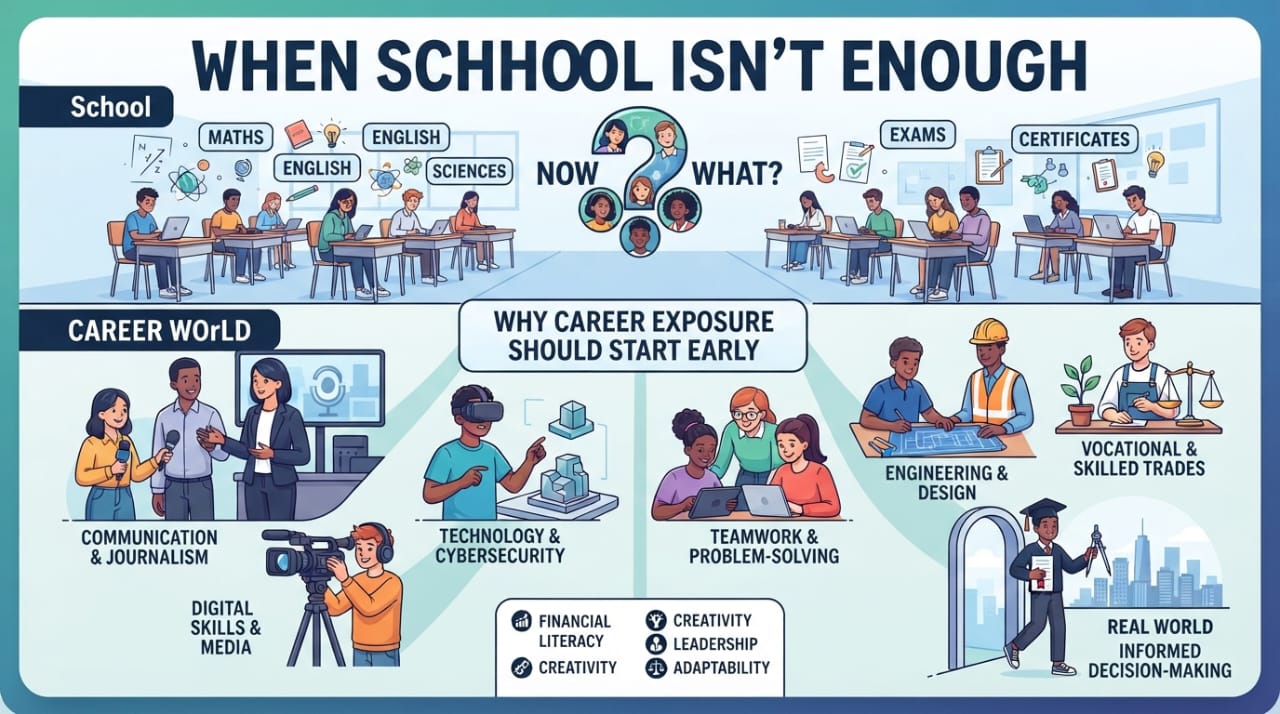
A student can spend more than a decade in school learning mathematics, English, sciences, social sciences and countless other subjects.
They can memorize definitions, complete assignments, pass examinations and collect certificates.
Then suddenly, they graduate.
And the questions change.
How do I write a professional CV?
How do I behave in an interview?
How do I manage money?
How do I communicate with a difficult colleague?
How do I discover what career actually suits me?
How does my chosen profession work in the real world?
For many students, these questions arrive after school has already ended.
This is why career exposure should begin much earlier.
Career education is not simply telling a student,
“You should become a doctor,”
“You should study law,”
“You should become an engineer.”
It is helping young people understand the world of work before they are expected to make major decisions about their future.
Students should have opportunities to meet professionals, visit workplaces, participate in practical projects, explore different industries, learn about emerging careers and discover the skills required for different professions.
A student who thinks they want to become a journalist may discover that they are more passionate about public relations.
Someone interested in technology may discover cybersecurity, animation, software development or digital marketing.
Another student may discover that a skilled trade or vocational career is a better fit for their abilities and interests.
Early exposure can turn career choice from guesswork into informed decision-making.
Schools also have an opportunity to introduce students to skills that are useful regardless of their eventual career:
communication,
teamwork,
problem-solving,
financial literacy,
creativity,
digital skills,
leadership,
adaptability.
Because the world of work is changing rapidly.
Some careers that are common today may look completely different in the future, while new careers continue to emerge. Preparing students therefore cannot only mean preparing them for a particular job. It must also mean preparing them to adapt.
Parents have a role too.
Sometimes children are encouraged to pursue careers based on prestige, income or family expectations rather than genuine interest and ability. While financial stability matters, a successful career is more sustainable when a person understands their strengths and finds meaningful ways to apply them.
School should not only answer the question:
“What did you learn?”
It should also help students answer:
“What can I do with what I have learned?”
Because education should not end at the school gate.
It should prepare young people to walk confidently through the doors waiting for them beyond it.
A student can spend more than a decade in school learning mathematics, English, sciences, social sciences and countless other subjects.
They can memorize definitions, complete assignments, pass examinations and collect certificates.
Then suddenly, they graduate.
And the questions change.
How do I write a professional CV?
How do I behave in an interview?
How do I manage money?
How do I communicate with a difficult colleague?
How do I discover what career actually suits me?
How does my chosen profession work in the real world?
For many students, these questions arrive after school has already ended.
This is why career exposure should begin much earlier.
Career education is not simply telling a student,
“You should become a doctor,”
“You should study law,”
“You should become an engineer.”
It is helping young people understand the world of work before they are expected to make major decisions about their future.
Students should have opportunities to meet professionals, visit workplaces, participate in practical projects, explore different industries, learn about emerging careers and discover the skills required for different professions.
A student who thinks they want to become a journalist may discover that they are more passionate about public relations.
Someone interested in technology may discover cybersecurity, animation, software development or digital marketing.
Another student may discover that a skilled trade or vocational career is a better fit for their abilities and interests.
Early exposure can turn career choice from guesswork into informed decision-making.
Schools also have an opportunity to introduce students to skills that are useful regardless of their eventual career:
communication,
teamwork,
problem-solving,
financial literacy,
creativity,
digital skills,
leadership,
adaptability.
Because the world of work is changing rapidly.
Some careers that are common today may look completely different in the future, while new careers continue to emerge. Preparing students therefore cannot only mean preparing them for a particular job. It must also mean preparing them to adapt.
Parents have a role too.
Sometimes children are encouraged to pursue careers based on prestige, income or family expectations rather than genuine interest and ability. While financial stability matters, a successful career is more sustainable when a person understands their strengths and finds meaningful ways to apply them.
School should not only answer the question:
“What did you learn?”
It should also help students answer:
“What can I do with what I have learned?”
Because education should not end at the school gate.
It should prepare young people to walk confidently through the doors waiting for them beyond it.
Comments (0)
No comments yet. Be the first to share your thoughts.