Education
WHEN TALENT MEETS EDUCATION: CAN SCHOOL HELP STUDENTS DISCOVER WHAT THEY'RE NATURALLY GOOD AT?
August 28, 2026 · 13 views ·by Emma-Golden
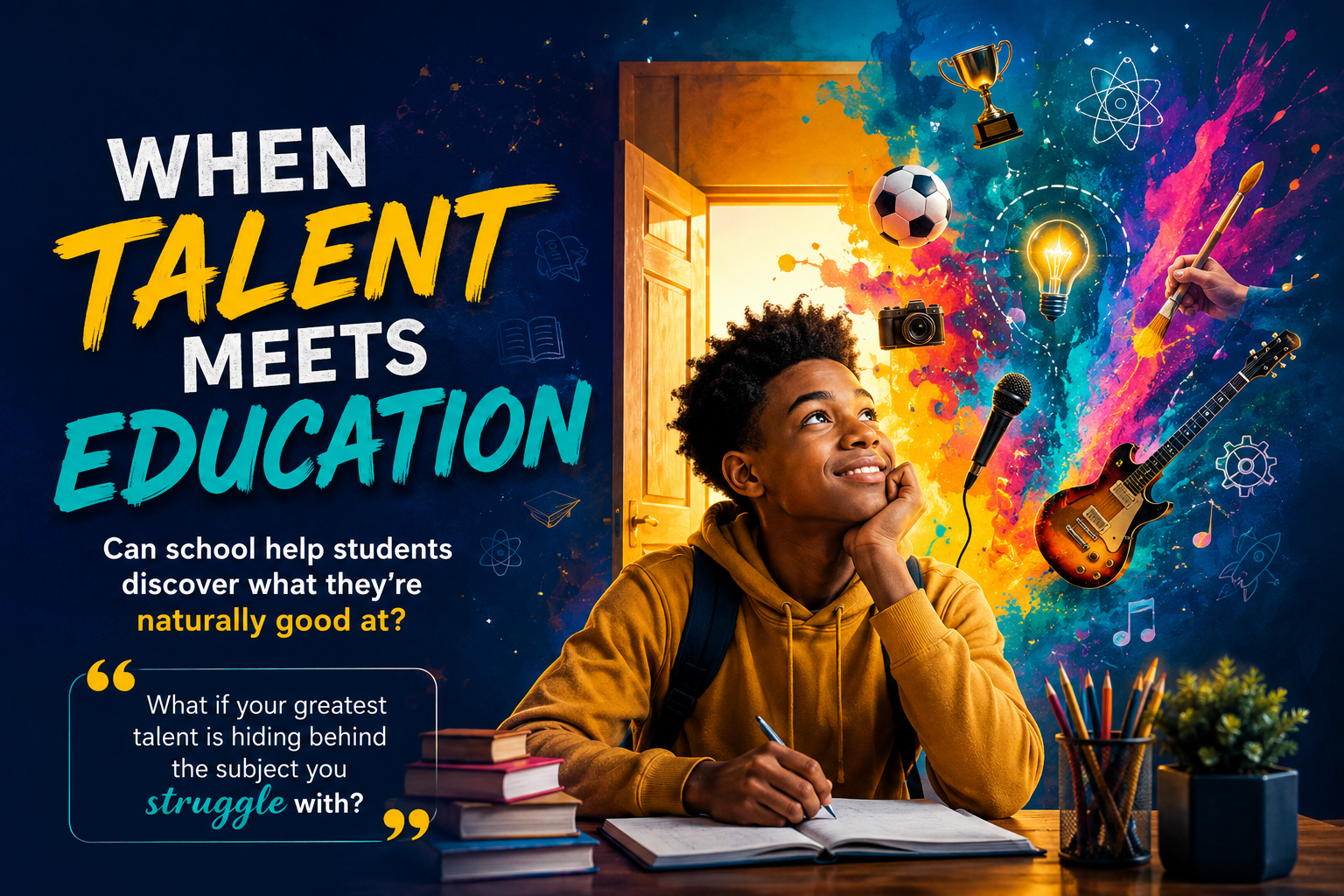
WHEN TALENT MEETS EDUCATION: CAN SCHOOL HELP STUDENTS DISCOVER WHAT THEY'RE NATURALLY GOOD AT?
For many students, school is often measured through a familiar formula: attend classes, write tests, submit assignments, and receive grades.
But human ability is much bigger than a report card.
One student may struggle with mathematics but have an incredible ability to tell stories.
Another may not enjoy traditional classroom learning but can design, build, organize, perform, sell, communicate, or solve practical problems with remarkable ease.
The question is: Are our educational systems doing enough to help students discover these abilities?
Education should not only be about identifying what students know. It should also help them discover what they can do.
Schools can expose students to music, technology, public speaking, entrepreneurship, sports, creative arts, leadership, writing, problem-solving and practical projects.
These experiences give young people opportunities to experiment and discover interests they may never have known existed.
This does not mean academics become unimportant. Rather, education becomes more complete when academic knowledge works alongside talent development.
A student who discovers their strength early has something powerful: direction.
They begin to understand what excites them, where they naturally perform well, and what skills they might want to develop further.
And sometimes, the talent that looks like a simple hobby at age 12 can become a career, business, or lifelong passion at 25.
Every student may not be the best at everything. But every student has the potential to be exceptional at something.
Perhaps one of education's greatest responsibilities is helping them discover what that something is.
For many students, school is often measured through a familiar formula: attend classes, write tests, submit assignments, and receive grades.
But human ability is much bigger than a report card.
One student may struggle with mathematics but have an incredible ability to tell stories.
Another may not enjoy traditional classroom learning but can design, build, organize, perform, sell, communicate, or solve practical problems with remarkable ease.
The question is: Are our educational systems doing enough to help students discover these abilities?
Education should not only be about identifying what students know. It should also help them discover what they can do.
Schools can expose students to music, technology, public speaking, entrepreneurship, sports, creative arts, leadership, writing, problem-solving and practical projects.
These experiences give young people opportunities to experiment and discover interests they may never have known existed.
This does not mean academics become unimportant. Rather, education becomes more complete when academic knowledge works alongside talent development.
A student who discovers their strength early has something powerful: direction.
They begin to understand what excites them, where they naturally perform well, and what skills they might want to develop further.
And sometimes, the talent that looks like a simple hobby at age 12 can become a career, business, or lifelong passion at 25.
Every student may not be the best at everything. But every student has the potential to be exceptional at something.
Perhaps one of education's greatest responsibilities is helping them discover what that something is.
Comments (0)
No comments yet. Be the first to share your thoughts.