Education
Why Curiosity Is More Powerful Than Intelligence
July 21, 2026 · 11 views
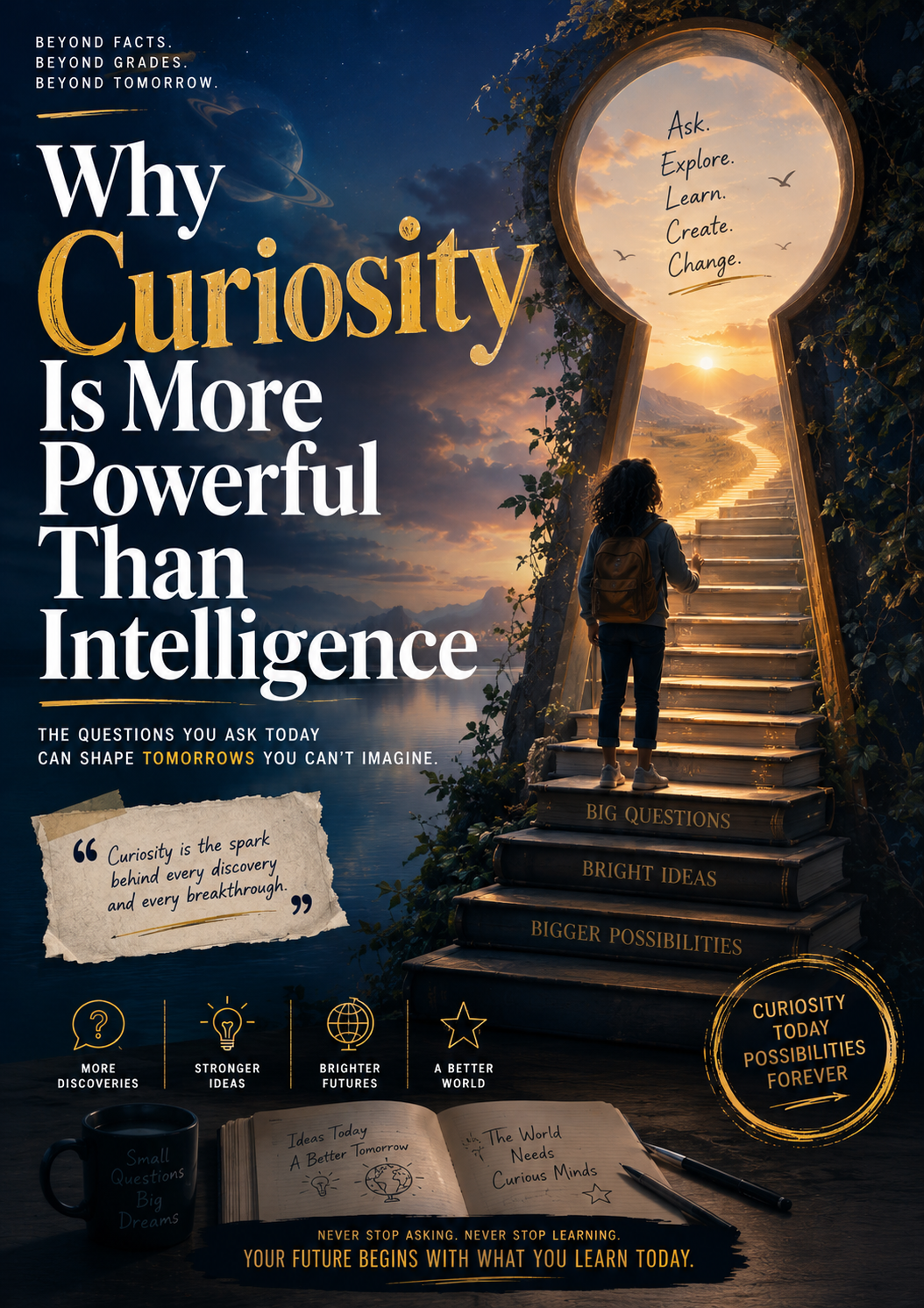
Why Curiosity Is More Powerful Than Intelligence
The students who ask the most questions often end up discovering the biggest opportunities.
For years, many people have believed that success in school belongs only to the naturally intelligent. We admire students who seem to understand everything quickly, score high marks with little effort, and always have the right answers. But research and real life tell a different story.
Curiosity, the simple desire to know more, is often a stronger predictor of lifelong success than raw intelligence alone.
Think about the people who have changed the world. Scientists, inventors, entrepreneurs, writers, and innovators all had one thing in common:
The students who ask the most questions often end up discovering the biggest opportunities.
For years, many people have believed that success in school belongs only to the naturally intelligent. We admire students who seem to understand everything quickly, score high marks with little effort, and always have the right answers. But research and real life tell a different story.
Curiosity, the simple desire to know more, is often a stronger predictor of lifelong success than raw intelligence alone.
Think about the people who have changed the world. Scientists, inventors, entrepreneurs, writers, and innovators all had one thing in common:
- They refused to stop asking questions.
- They wanted to know how things worked,
- why problems existed, and
- whether there was a better solution.
Curious students don't just memorize information to pass exams.
- They dig deeper.
- They ask, "Why does this happen?"
- or "What would happen if we tried something differently?"
Those questions lead to understanding, and understanding lasts much longer than memorized facts.

Curiosity also changes the way we learn. When you're genuinely interested in a topic, your brain pays closer attention and remembers information more effectively. Lessons become less about completing assignments and more about exploring ideas. That's why students often remember subjects they enjoyed far better than topics they studied only for an exam.
Another advantage of curiosity is resilience. Curious learners are less afraid of making mistakes because they see mistakes as part of the learning process. Instead of giving up after getting an answer wrong, they become eager to find out why.
That mindset helps build confidence, creativity, and problem-solving skillsqualities that are valuable not only in school but throughout life.
The good news is that curiosity isn't something you're born with or without. It's a habit you can develop.
-Read beyond your textbooks.
-Watch educational documentaries.
-Ask your teachers questions.
-Explore topics that interest you, even if they aren't part of your curriculum.
Every new question opens the door to another discovery.
At the end of the day, intelligence may help you answer today's questions, but curiosity helps you discover tomorrow's possibilities. The world rewards people who continue learning long after the classroom lessons have ended.
Never stop asking questions. Every great achievement in history began with someone who was curious enough to ask, "What if?"
Your Future Begins with What You Learn Today.
Comments (0)
No comments yet. Be the first to share your thoughts.