Lifestyle
Your Phone Should Connect You to Life, Not Steal It
July 22, 2026 · 7 views
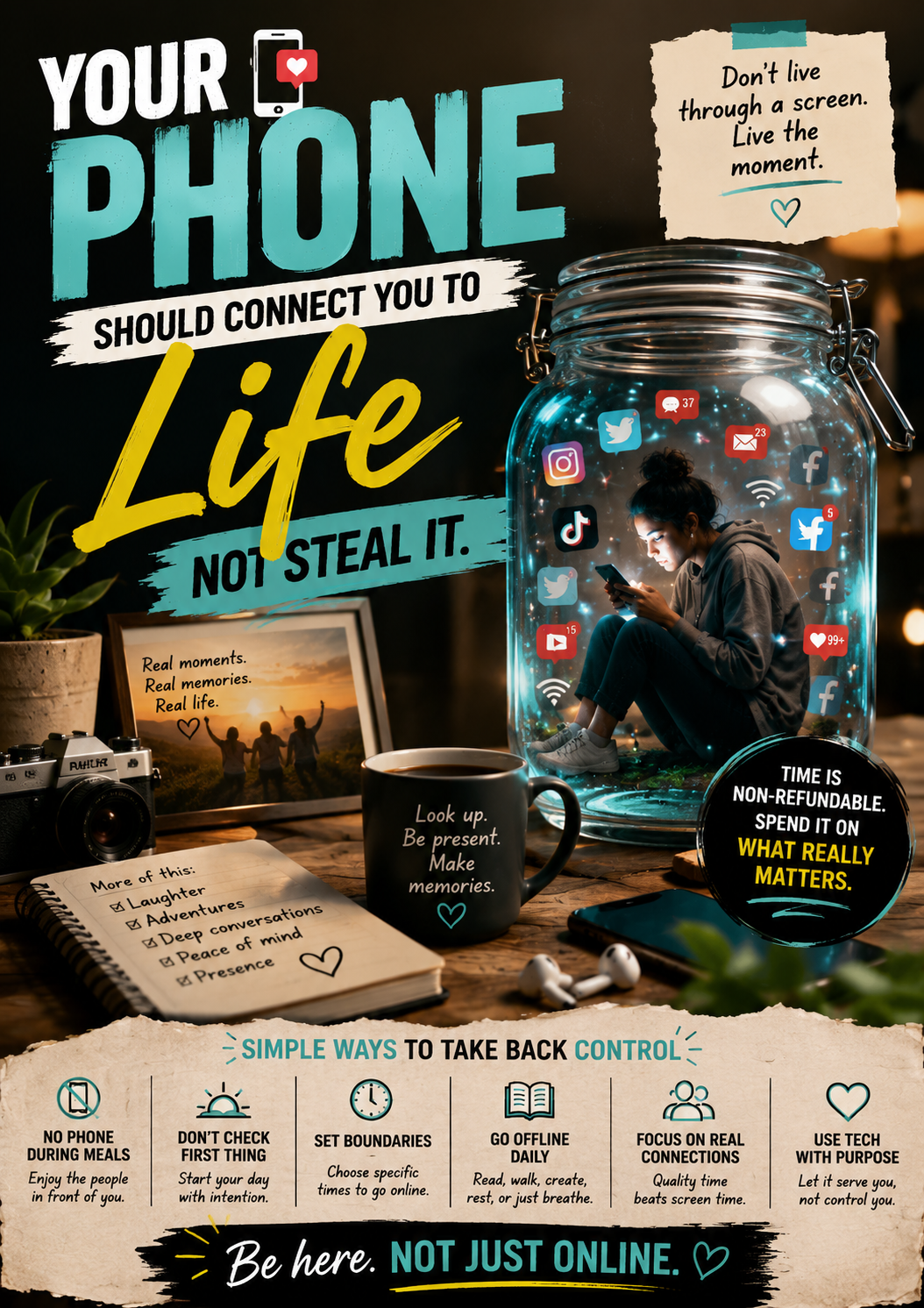
Your Phone Should Connect You to Life, Not Steal It
In today's world, our phones have become more than communication devices. They are our alarm clocks, cameras, calendars, offices, entertainment centers, shopping assistants, and even our source of news. With just a few taps, we can speak to someone across the world, order food, pay bills, learn a new skill, or grow a business.
Technology has undoubtedly made life easier.
But somewhere along the way, many of us stopped using our phones as tools, and started letting them use us.
Have you ever picked up your phone to reply to one message, only to realize thirty or forty minutes had passed? Maybe you opened one social media app "just for a minute," then found yourself watching countless videos, reading comments, and jumping from one platform to another.
It happens more often than we'd like to admit.
Time slips away quietly, and before we know it, we've lost hours that could have been spent creating memories, building relationships, learning something new, or simply resting our minds.
The question isn't whether phones are good or bad.
The real question is: Who is in control, you or your phone?
The Invisible Habit We Hardly Notice
Unlike many habits, excessive phone use often develops without us realizing it.
- We check notifications while eating.
- We scroll before getting out of bed.
- We unlock our screens during conversations.
- We reach for our phones whenever we're bored, waiting in line, or sitting in silence.
Eventually, checking our phones becomes automatic.
Many people don't even remember why they picked up their device in the first place.
The scary part isn't just the amount of time we spend on our phones, it's how easily they distract us from the present moment.
Life continues happening around us while our attention stays fixed on a screen.
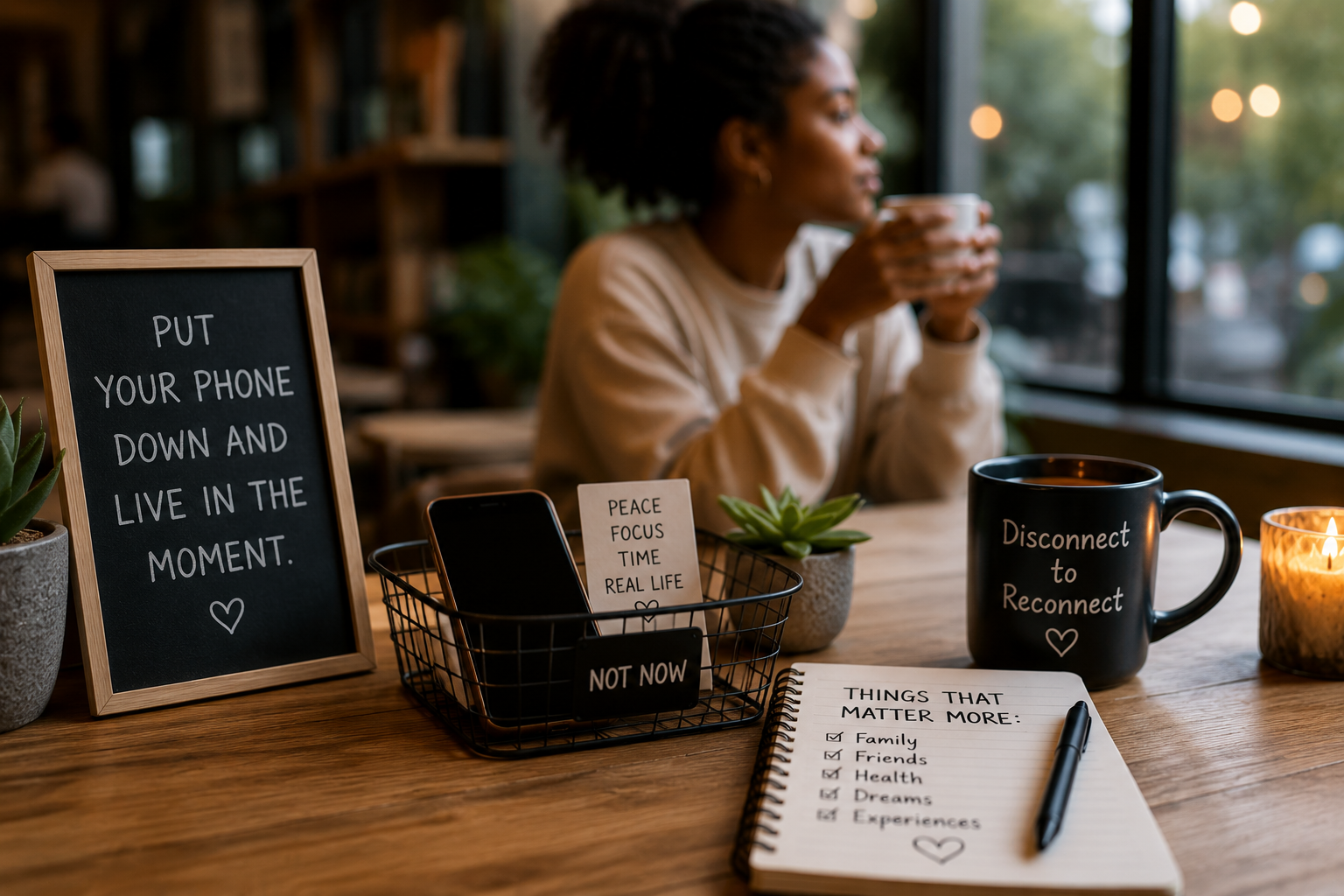
When the Digital World Becomes Louder Than the Real One
Social media has made it possible to stay connected with people from every corner of the world.
Yet many people admit they feel lonelier than ever.
Why?
Because digital interactions can never completely replace genuine human connection.
A "like" isn't the same as a heartfelt conversation.
A reaction emoji cannot replace laughter shared over dinner.
A video call is wonderful, but it doesn't always replace being physically present with the people who matter most.
The more time we spend living through our screens, the easier it becomes to overlook the beautiful moments happening right in front of us.
The smile of a loved one.
A peaceful sunset.
The sound of children playing.
A meaningful conversation without interruptions.
These moments don't usually go viral, but they often become the memories we treasure for years.
Your Mind Needs Quiet Too
One of the biggest consequences of constant phone use is mental overload.
Our brains were never designed to process endless notifications, breaking news, viral trends, advertisements, emails, and hundreds of opinions every single day.
Without realizing it, our minds become exhausted.
This can lead to difficulty concentrating, increased stress, poor sleep, reduced creativity, and the constant feeling that we must always be available.
Sometimes the healthiest thing we can do isn't adding more information.
It's creating space for silence.
Silence allows us to think clearly.
It gives our minds time to rest, reflect, and recharge.
Building a Healthier Relationship with Technology
Living a balanced digital lifestyle doesn't mean throwing away your phone or deleting every social media account.
Technology is a wonderful servant.
It simply shouldn't become our master.
Start with small, realistic changes.
Leave your phone aside during meals.
Resist the urge to check notifications the moment you wake up.
Choose one hour each day where your screen stays off.
Take walks without constantly looking at your device.
Read a physical book occasionally.
Spend uninterrupted time with family and friends.
You may be surprised by how peaceful these simple habits feel.
The goal isn't perfection.
The goal is intentional living.
Create More Than You Consume
One healthy way to reduce endless scrolling is to spend more time creating.
- Write.
- Draw.
- Cook.
- Exercise.
- Start a journal.
- Learn photography.
- Practice an instrument.
- Build your business.
- Volunteer.
- Develop a new skill.
When your life becomes filled with meaningful activities, you'll naturally spend less time searching for entertainment online.
The most fulfilling lives are rarely built through endless consumption.
They're built through purposeful creation.
Life Is Happening Now
Imagine looking back ten years from today.
Will you remember every funny video you watched?
Every trend you followed?
Every comment section you read?
Probably not.
But you'll remember birthdays.
Road trips.
Unexpected laughter.
Family gatherings.
The conversations that changed your life.
The people who stood by you.
The risks you took.
The dreams you pursued.
Those moments deserve your full attention.
Final Thoughts
Your phone is one of the most powerful tools ever created.
It can educate you, connect you, inspire you, and even help you build a successful career.
But no screen should become more important than the life unfolding beyond it.
Look up more often.
Listen more carefully.
Be fully present with the people you love.
Take the picture, but don't forget to enjoy the moment before and after the camera clicks.
Because at the end of the day, the richest life isn't measured by how much content you consumed.
It's measured by how fully you lived.
Use your phone to enrich your life, not to replace it.
Comments (0)
No comments yet. Be the first to share your thoughts.